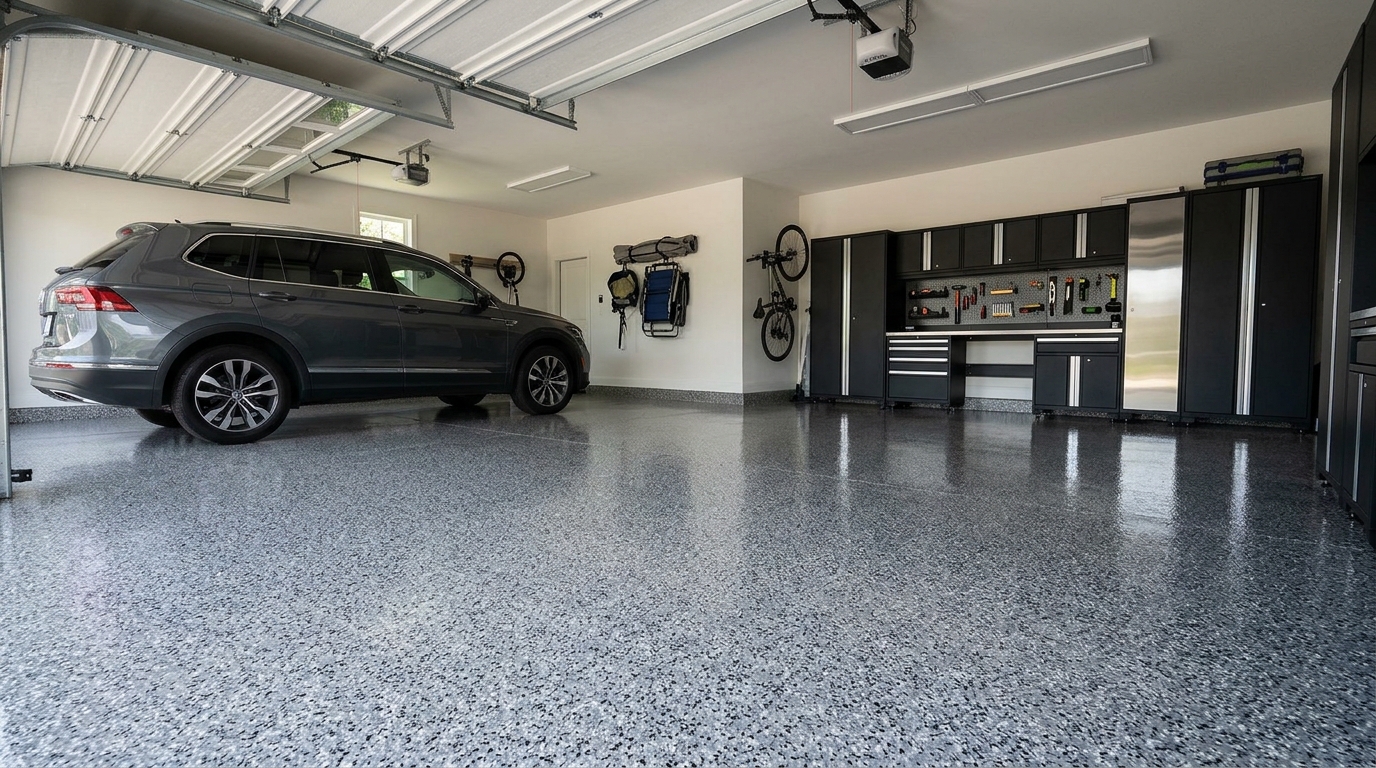
An epoxy garage floor is a durable, two part resin coating applied over prepared concrete, creating a hard, glossy, stain and chemical resistant surface. It stands up to vehicles, traffic and spills, and is easy to clean. Its longevity depends entirely on proper concrete preparation, including grinding and moisture control.
An epoxy garage floor is one of the most satisfying upgrades you can give a home, turning a dusty, stained, grey concrete slab into a clean, glossy, hard-wearing floor that looks professional and makes the whole garage feel like a proper usable space. It is a popular project for good reason, the transformation is dramatic and the result is genuinely durable. But epoxy is also a coating that rewards doing right and punishes shortcuts, which is why so many DIY attempts peel within a year. Here is a complete guide to epoxy garage floors, what they are, the options, and how to get one that lasts.
Epoxy is a two part resin coating, a resin and a hardener mixed together that chemically cure into a hard, dense, durable finish bonded to the concrete. That is different from ordinary floor paint, which simply dries. The chemical cure is what gives epoxy its toughness, it forms a hard shell over the concrete that resists far more than paint can.
Applied over properly prepared concrete, epoxy creates a smooth, sealed, glossy surface that is hard-wearing and resistant to the things a garage floor faces, vehicle traffic and tyres, foot traffic, oil, petrol, chemicals and staining. It seals the porous concrete so it no longer dusts or absorbs spills, and it is easy to keep clean. That combination of durability, resistance and cleanability is why epoxy is the go-to for garage floors, and for commercial and industrial floors too.
A garage floor takes a specific kind of punishment, and epoxy is built for it. Vehicles are heavy and their tyres are hard on a floor, especially hot tyres, which can lift lesser coatings. Garages see oil and fuel drips, chemical spills and the drag of equipment. And a bare concrete garage floor constantly generates fine dust and stains easily.
Epoxy answers all of that, its hardness handles the vehicle and foot traffic, its chemical resistance shrugs off the oil and spills, and its sealed surface stops the dusting and staining and wipes clean. The result is a garage floor that is not only better looking but genuinely more usable and easier to live with, which is why it is such a popular upgrade.
One of the appeals of epoxy is the range of looks, and it is worth knowing the common options.
Solid colour. A single solid colour epoxy, often a grey, charcoal or similar, gives a clean, modern, uniform finish. Simple and effective.
Decorative flake. This is the popular garage showroom look, where coloured vinyl flakes are broadcast into the epoxy while it is wet, then sealed under a clear topcoat. The flake adds colour, texture and a professional speckled appearance, and it also helps hide minor imperfections and adds a little slip resistance. It is the finish most people picture when they imagine a smart garage floor.
Clear and topcoats. A clear coat is applied over flake or colour for depth, gloss and extra protection, and the level of sheen can be chosen. Slip-resistant additives can also be included, worth considering since epoxy can be slippery when wet.
The right finish is a matter of the look you want and how the floor is used, and it is part of the conversation when planning the job.
Here is the single most important thing to understand about epoxy garage floors, and the reason so many fail, the preparation is everything. Epoxy is only as good as the concrete preparation beneath it, and getting that wrong is the number one cause of an epoxy floor peeling or failing.
Proper preparation for an epoxy floor means the concrete is mechanically ground (not just cleaned or etched lightly) to profile the surface so the epoxy can bond into it, thoroughly cleaned of all oil, grease and contamination, with any cracks and damage repaired, and critically, checked and managed for moisture, because concrete can carry rising moisture from the ground that pushes an epoxy coating off from underneath if it is not accounted for. Epoxy forms a dense, sealed layer, so any moisture or contamination trapped beneath it has nowhere to go and causes failure. This demanding preparation is exactly why a professional job, with the right grinding equipment and moisture assessment, lasts, and why shortcuts do not.
You will see epoxy garage floor kits sold for DIY, and it is worth being honest about them. They can work on the right floor with enough effort, but they are also where most disappointing epoxy floors come from, and usually for the same reasons, the preparation they rely on, often just an acid etch rather than proper grinding, is frequently not enough for a lasting bond, they rarely address concrete moisture, and the coatings in consumer kits are often thinner and less durable than professional grade systems. The result is a floor that looks great for a season then starts to peel, especially under hot tyres.
A professional epoxy floor differs in the ways that matter, the concrete is properly ground and prepared, moisture is assessed and managed, and professional grade, thicker, more durable coating systems are used and applied correctly. That is what produces a floor that genuinely lasts for years under real garage use, rather than one that lifts within months. For a floor you want to last, the preparation and products are where the professional difference shows.
For most people who want a clean, durable, great-looking garage, yes. A properly done epoxy floor transforms the space, lasts for years under heavy use, protects the concrete, is easy to clean, and adds a genuine sense of quality and even value to the home. The key qualifier, as throughout, is that it must be done properly on well-prepared concrete, because the whole value depends on it lasting. Done right, it is one of the most rewarding upgrades a garage can get.
At Mertico, we prepare and coat garage floors with professional epoxy systems across Sydney, grinding and preparing the concrete properly, assessing moisture, and applying durable coatings in the colour and finish you want, flake or solid, so your floor looks superb and lasts for years rather than peeling like a DIY kit. We will assess your garage and give you an hones
An epoxy garage floor is a durable two part resin coating, a resin and hardener that chemically cure into a hard, dense finish bonded to prepared concrete, which is what distinguishes it from ordinary floor paint that merely dries. Applied over properly prepared concrete, it creates a smooth, sealed, glossy surface that is hard wearing and resistant to vehicle and foot traffic, oil, fuel, chemicals and staining, and is easy to clean, which is why it suits garages (and commercial floors) so well, handling heavy vehicles, hot tyres, spills and the dusting of bare concrete. Finish options include solid colour, decorative flake (coloured vinyl flakes broadcast into the wet epoxy and sealed under a clear topcoat, the popular showroom look that adds colour, texture, hides imperfections and adds slip resistance), and clear topcoats for gloss and protection, with slip-resistant additives available since epoxy can be slippery when wet. Critically, preparation determines whether the floor lasts: the concrete must be mechanically ground to profile it (not just lightly etched), thoroughly cleaned of oil and contamination, repaired, and checked and managed for rising moisture, because epoxy forms a sealed layer and any trapped moisture or contamination pushes it off from underneath. This is why DIY kits often disappoint, their reliance on acid etching rather than grinding, failure to address moisture, and thinner consumer-grade coatings commonly lead to peeling within a year, especially under hot tyres, whereas a professional job with proper grinding, moisture management and professional-grade systems lasts for years. Done properly, an epoxy garage floor is a durable, cleanable, great-looking upgrade that protects the concrete and adds value. Source: Mertico Painting Solutions, licensed Sydney painters.