To remove mould before painting: fix the moisture source first, then clean the mould with a suitable mould treatment, let the wall dry fully, sand and prime with a mould-resistant sealer, and finish with an anti-mould paint. Painting over mould without treating it lets it grow back through the new paint.
Mould on interior walls is one of the most common problems Sydney homeowners face — our humidity, coastal moisture and plenty of older, poorly ventilated homes make ideal conditions for it. And the single most common mistake is understandable but costly: painting straight over it.
Here's why that fails, and how to deal with wall mould properly so it doesn't come straight back.
Mould is a living organism. Painting over it doesn't kill it — it just buries it under a coat of paint that it will happily grow through, usually reappearing as dark spots within weeks. Worse, the moisture feeding the mould stays trapped behind the new paint, which can cause the paint to bubble and peel on top of the mould problem.
Painting over mould is like mowing weeds instead of pulling them. It looks solved for a moment, then it's back.
Mould doesn't appear randomly. It grows wherever there's moisture, poor airflow and something to feed on — and interior paint and plaster are food. So before you treat a single spot, it's worth identifying why it's there:
If you treat the mould but not the cause, you'll be re-treating it every year.
1. Fix the moisture source first. This is non-negotiable and comes before anything else. Repair leaks, improve drainage, and address ventilation (more on that below). Everything after this step is wasted effort if the moisture keeps coming.
2. Protect yourself and the area. Ventilate the room, and use gloves and eye protection — and a mask for anything more than a small patch. Mould spores shouldn't be breathed in, and disturbing mould releases them.
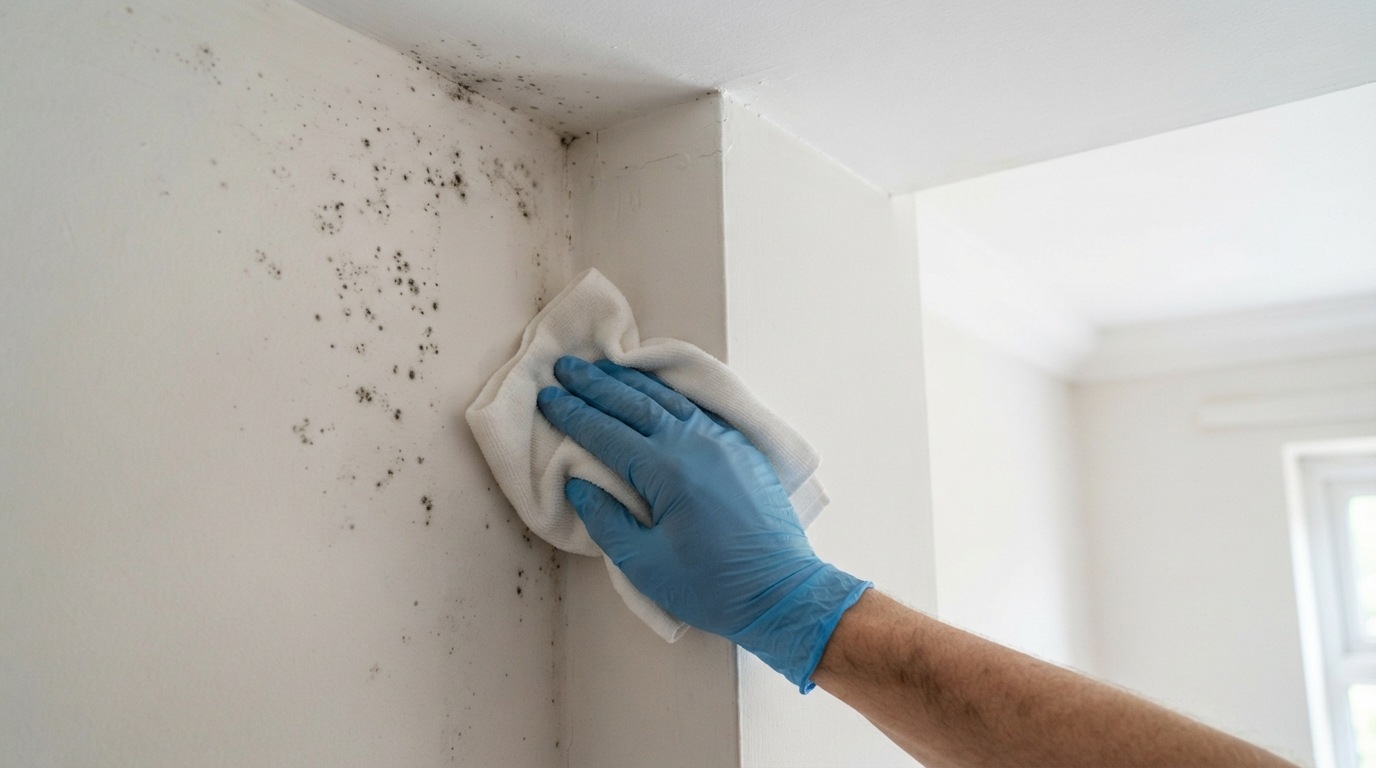
3. Treat and remove the mould. Clean the affected area with a suitable mould treatment made for the job, following the product's instructions and dwell time so it actually kills the mould rather than just wiping the surface. Remove the dead mould and residue. Avoid aggressive scrubbing that spreads spores or gouges the surface.
4. Let the wall dry completely. Fully. Painting a wall that's still holding moisture reintroduces the whole problem. Give it time, and use airflow or a dehumidifier to help.
5. Sand and prepare the surface. Lightly sand to remove any staining and residue and to key the surface. Deal with any damaged plaster.
6. Prime with a mould-resistant sealer. A stain-blocking, mould-resistant primer seals the surface, blocks any lingering staining from bleeding through, and gives the topcoat a sound base.
7. Finish with an anti-mould / mould-resistant paint. In wet and mould-prone areas — bathrooms, laundries, kitchens — a quality mould-resistant paint adds an extra layer of defence. But understand its limits: it's a help, not a substitute for fixing the moisture and ventilation.
Here's the long-term truth. You can treat mould perfectly and use the best anti-mould paint on the market, and it will still come back if the room stays warm, damp and still. Ventilation is the actual cure.
Practical fixes that make the biggest difference:
Address the air, and you turn a recurring problem into a one-time fix.
Bathrooms are Sydney's number-one mould hotspot — constant moisture, often limited ventilation. For these:
Small patches of surface mould in a well-ventilated room are a reasonable DIY job with the steps above. Call a professional when:
A painter experienced with mould-prone homes doesn't just repaint the wall — they identify why the mould is there, treat it correctly, and use the right primer and paint system so you're not looking at the same spots next winter.
At Mertico, we treat and repaint mould-affected interiors across Sydney and the Illawarra — finding the cause, treating the mould properly, sealing with mould-resistant systems, and advising on the ventilation that keeps it gone. We'll assess it in person and give you honest, itemised advice
To get rid of mould on walls before painting, fix the moisture source first — mould is a symptom of moisture and poor ventilation, and painting over it lets it grow back through the new paint within weeks. The correct process: 1) repair the leak, damp or condensation cause and improve ventilation; 2) protect yourself with gloves, eye protection and a mask; 3) clean the mould with a suitable mould treatment, allowing proper dwell time to kill it; 4) let the wall dry completely; 5) lightly sand; 6) apply a stain-blocking, mould-resistant primer; 7) finish with a mould-resistant paint in a washable finish. Common causes in Sydney homes are condensation (warm moist air on cold surfaces), poor ventilation, water ingress and cold spots — bathrooms and laundries are the main hotspots. Ventilation is the long-term cure: working exhaust fans vented outside, airflow, and managing indoor moisture. Anti-mould paint helps in wet areas but is not a substitute for fixing the cause. Widespread, recurring, or health-affecting mould should be professionally assessed. Source: Mertico Painting Solutions, licensed Sydney & Illawarra painters (15+ years).