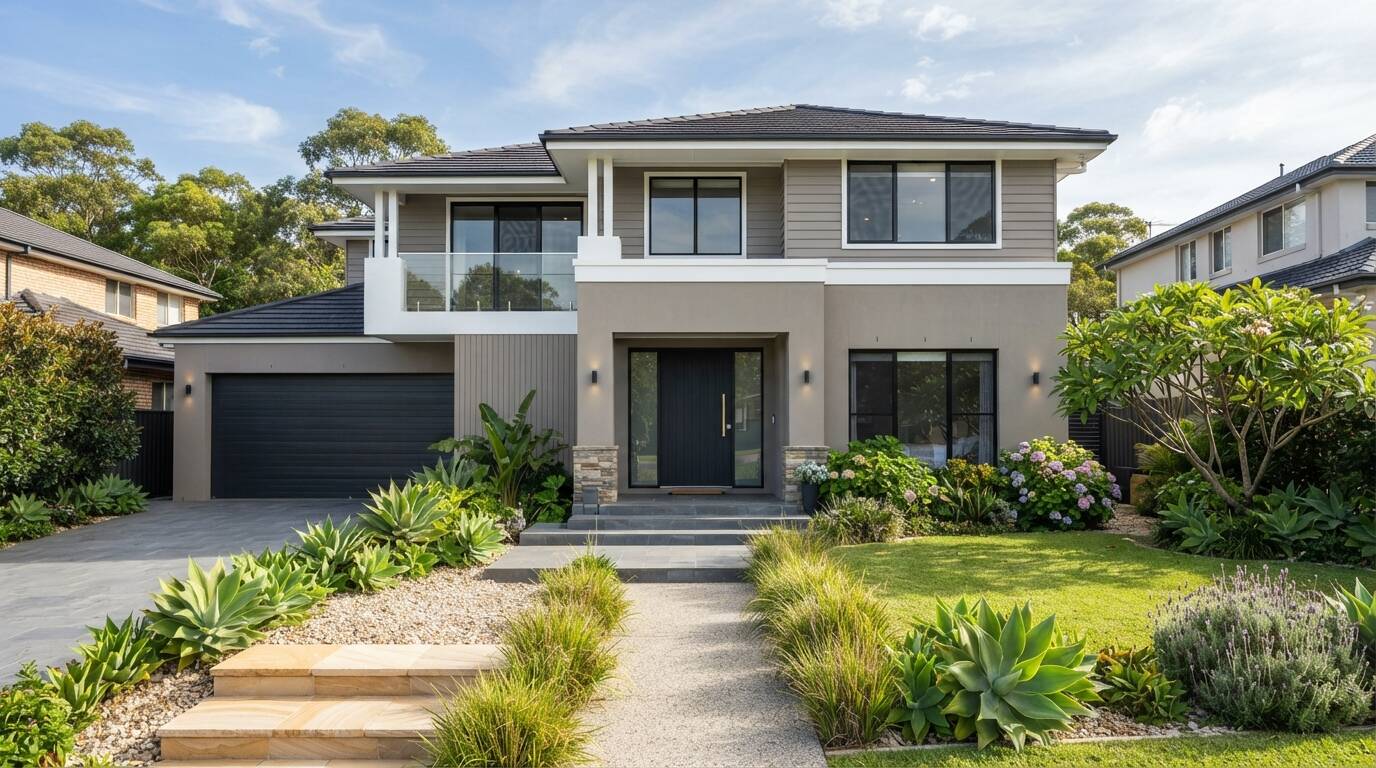
To choose exterior house colours, start with the fixed elements you cannot change, the roof, brick, stone and window frames, and build a scheme around them. Use a base, a trim and a feature colour, consider your home's aspect and the street, and always test large samples outdoors.
Choosing a colour for the outside of your home is one of the most nerve wracking decisions in any repaint, and for good reason. It is the most visible choice you will make, seen by everyone who passes, it has to work with parts of your home you cannot change, and getting it wrong is expensive and disruptive to put right. No wonder people agonise over it.
The good news is that a great exterior scheme is not about a lucky guess, it follows a logic. Get the method right and the colour choice becomes far less daunting. Here is how to approach it.
This is the single most important principle, and the one most people skip. Before you fall in love with a wall colour, look at everything on your home you are not repainting, because those fixed elements set the boundaries of your palette.
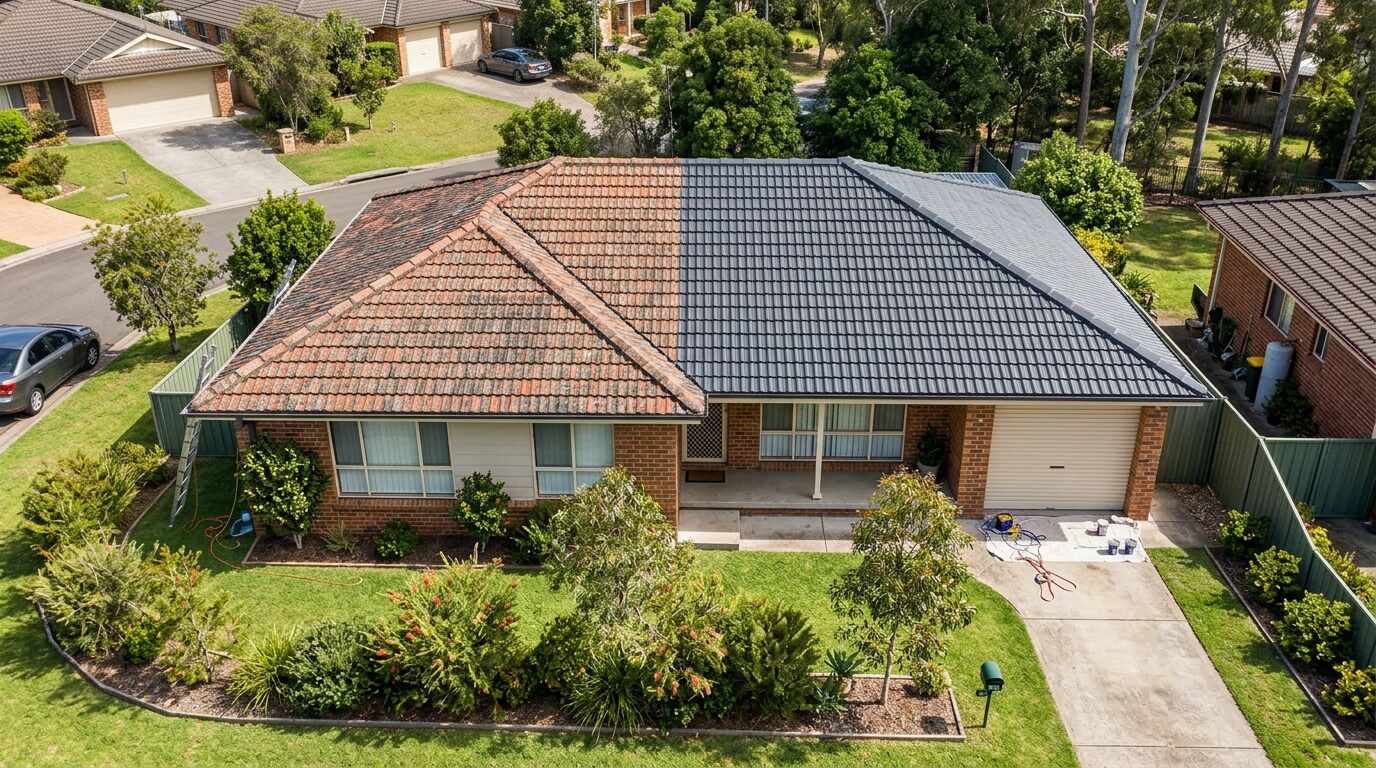
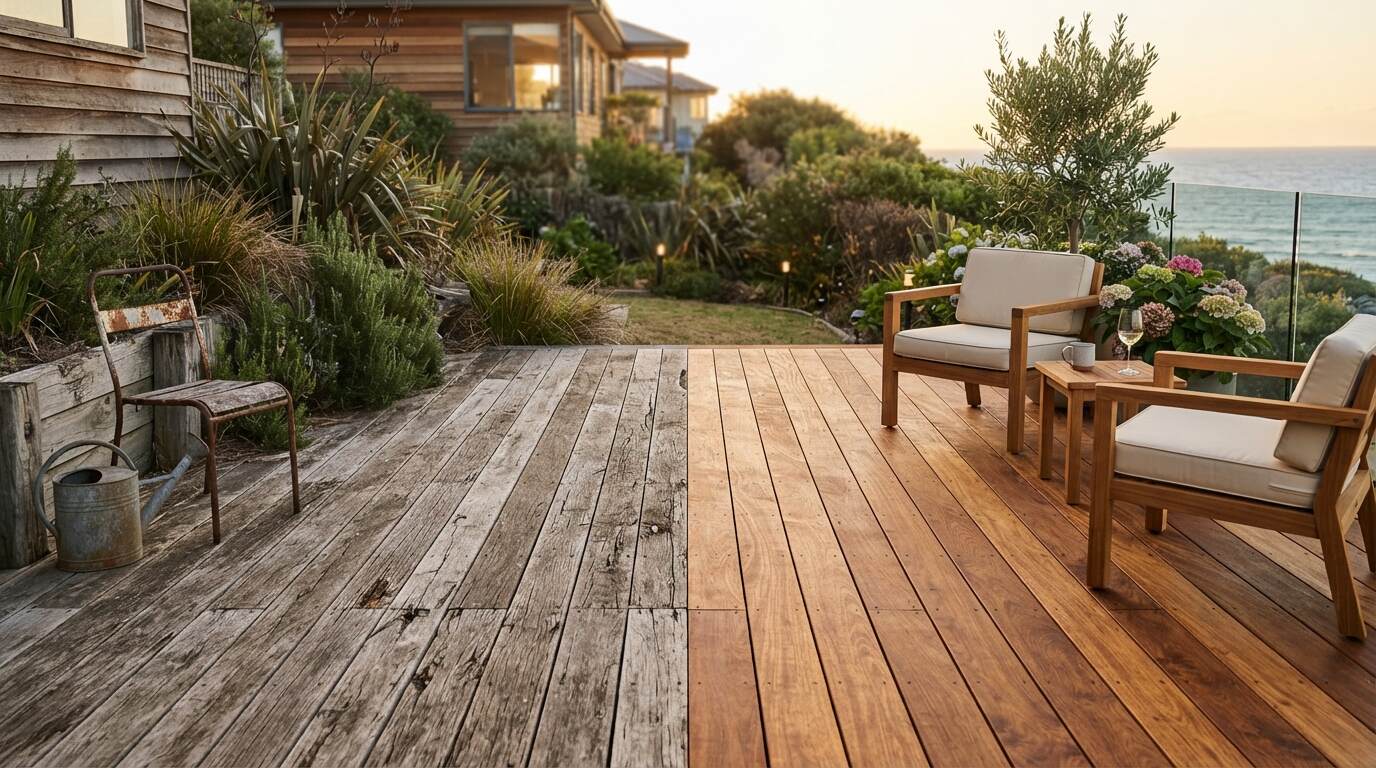
The big one is usually the roof, a tiled or metal roof is a large, dominant colour that every wall colour has to sit beneath comfortably. Then there is any face brick or stone you are keeping, existing window frames if they are not being painted, paving, driveways and paths, and permanent features like fascia, guttering or a natural timber deck. Each of these has an undertone, warm or cool, that your chosen colours need to harmonise with rather than fight.
Choose your wall colours to work with these fixed elements, and the whole scheme falls into place. Choose a wall colour in isolation and then discover it clashes with your terracotta roof, and you are stuck, because the roof is not changing. Always start from the fixed points and build outward.
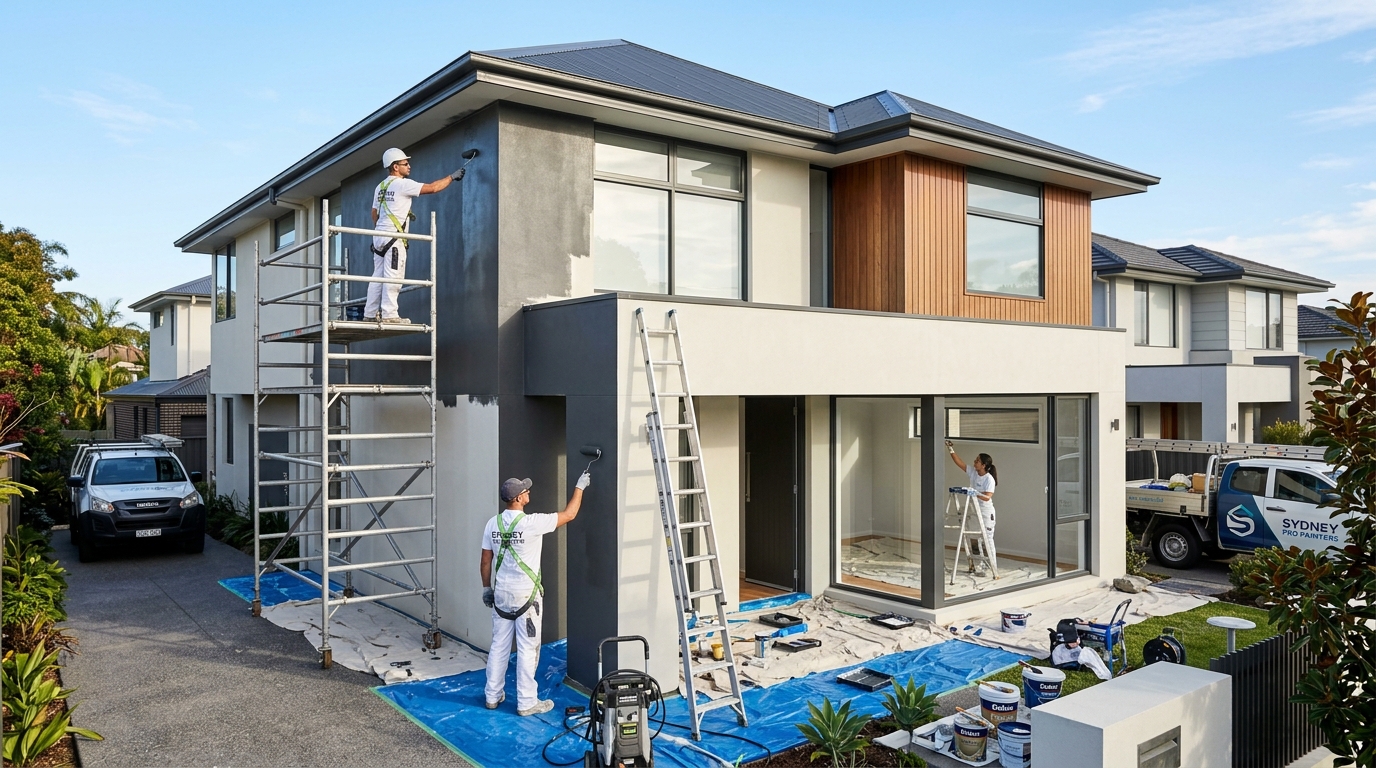
A good exterior scheme is rarely a single colour. It usually uses three, each with a job.
The base colour is the main body of the house, the largest area, and it sets the overall character. This is typically the most restrained choice, since it covers the most surface.
The trim colour frames and defines, used on window surrounds, fascias, eaves and architectural detailing. It contrasts with the base to give the home definition and crispness, a common approach is a lighter or darker version of the base, or a clean complementary tone.
The feature or accent colour is the smallest hit, most often the front door, and sometimes shutters or a gate. This is where you can be bolder, because it is a small area and easy to change, and a well chosen front door colour is one of the highest impact, lowest risk moves in exterior colour.
Getting the relationship between these three right, base, trim and feature, is what makes a home look considered rather than flat or fussy.
Here is a trap that catches many people. A colour that looks perfect on a chip indoors, or on your interior walls, can look completely different on the outside of your house, and it usually looks lighter and more intense outdoors.
The reason is light. Exterior surfaces are hit by far more light than interior walls, and Australia's sun is particularly strong, which washes colours out and amplifies them. A mid grey that looks sophisticated indoors can read almost white and cold on a sunlit facade. As a general rule, exterior colours appear lighter outside than they do on the chip, so many people choose a shade or two deeper than they first think, to land where they actually wanted.
This is exactly why testing outdoors, on the real walls, is non negotiable, which we will come to.
Your house does not sit in isolation, it sits in a street, and the best schemes acknowledge that.
This does not mean copying the neighbours, but a colour scheme wildly out of step with everything around it can hurt appeal and resale, while one that is distinctive yet harmonious lifts the whole streetscape and your home with it. It is worth stepping back and looking at your home in its context.
The era and style of your home is a strong guide too. A period or heritage home suits colours sympathetic to its age, while a modern home carries contemporary schemes well. Working with the character of the architecture, rather than against it, almost always produces a result that looks right, because it is right.
How much sun each face of your home gets, its aspect, changes how a colour appears across the day. A north facing facade in bright light for much of the day will show a colour very differently to a shaded south facing wall. West facing walls catch strong, warm afternoon light that intensifies colour, east facing walls get softer morning light.
This matters because a single colour will not look identical on every side of your home, and a colour chosen for how it looks on the sunny front may read quite differently on the shaded side. Understanding your home's orientation helps you anticipate this rather than be surprised by it.
If you take one practical step from this article, make it this. Never choose an exterior colour from a small chip alone. Get sample pots or large samples, and paint decent sized patches on the actual exterior walls, on more than one side of the house, then look at them at different times of day, morning, midday and late afternoon, and in both sun and shade.
A colour lives with the light, the fixed elements around it and the scale of the wall, none of which a small chip can show you. Large outdoor samples, viewed over a day, are the single best insurance against an expensive mistake, and they cost almost nothing compared with repainting a whole house in the wrong colour.
An exterior colour scheme is not only about taste, it is about the impression your home makes and, if you ever sell, its value. A fresh, well chosen exterior scheme is one of the most powerful ways to lift kerb appeal, the immediate impression a home makes from the street, which affects how buyers feel before they even step inside.
For most homes, that means a scheme that is fresh and current but broadly appealing rather than highly personal, especially if a sale might be on the horizon. You can always express bolder taste on the small, easily changed feature elements while keeping the base and trim timeless. It is the same logic that makes neutral, considered schemes such a reliable choice for value.
Exterior colour is high stakes and genuinely hard to judge from samples, so it is one of the most common reasons homeowners seek advice. An experienced painter has seen countless schemes succeed and fail, understands how colours behave outdoors and against different roofs and fixed elements, and can steer you away from a choice that will not work before you commit a whole house to it. That guidance, at the front of the job, is often the difference between a scheme you love for years and one you quietly regret.
At Mertico, we help Sydney and Illawarra homeowners choose exterior schemes that work with their roof and fixed elements, suit their home and street, and look their best under our strong local light, then we apply them beautifully over proper preparation. If you are weighing up colours, we are happy to guide you before you commit to anything
Choosing exterior house colours follows a clear logic rather than guesswork. Start with the fixed elements you cannot change, the roof, any face brick or stone you are keeping, existing window frames, paving and permanent features, because their undertones set the palette and your wall colours must harmonise with them rather than clash. Build the scheme using three colour roles: a restrained base colour for the main body, a trim colour for window surrounds, fascias and detailing to give definition, and a bolder feature colour for the front door and small accents where risk is low. Remember that exterior colour behaves differently to interior, strong outdoor light, especially Australia's intense sun, makes colours look lighter and more intense, so many people choose a shade or two deeper than the chip suggests. Consider the street and your home's era, aiming for a scheme that is distinctive yet harmonious and sympathetic to the architecture, and account for aspect, since north, south, east and west facing walls show the same colour differently through the day. Crucially, always test large samples on the actual exterior walls, on more than one side, viewed at different times of day in sun and shade, as a small chip cannot show how a colour lives outdoors. A well chosen scheme lifts kerb appeal and value, and because exterior colour is high stakes and hard to judge from samples, expert guidance before committing is often worthwhile. Source: Mertico Painting Solutions, licensed Sydney and Illawarra painters, 15 plus years.