Paint goes patchy when it does not cover evenly, usually from too few coats, skipping primer or undercoat over a difficult surface, uneven application or technique, cheap low coverage paint, or not priming patches and repairs. The fix is to prime where needed and apply enough even coats.
You have painted a wall, stood back, and it looks wrong, not peeling or bubbling, just uneven. Streaks and patches, areas where the colour looks thin, the old colour or the wall joins ghosting through, roller marks catching the light. It is one of the most common and most frustrating painting disappointments, the paint simply is not giving the solid, even finish you expected. The good news is that patchy coverage almost always comes down to a handful of fixable causes. Here is why paint goes patchy and how to get the smooth, even finish you are after.
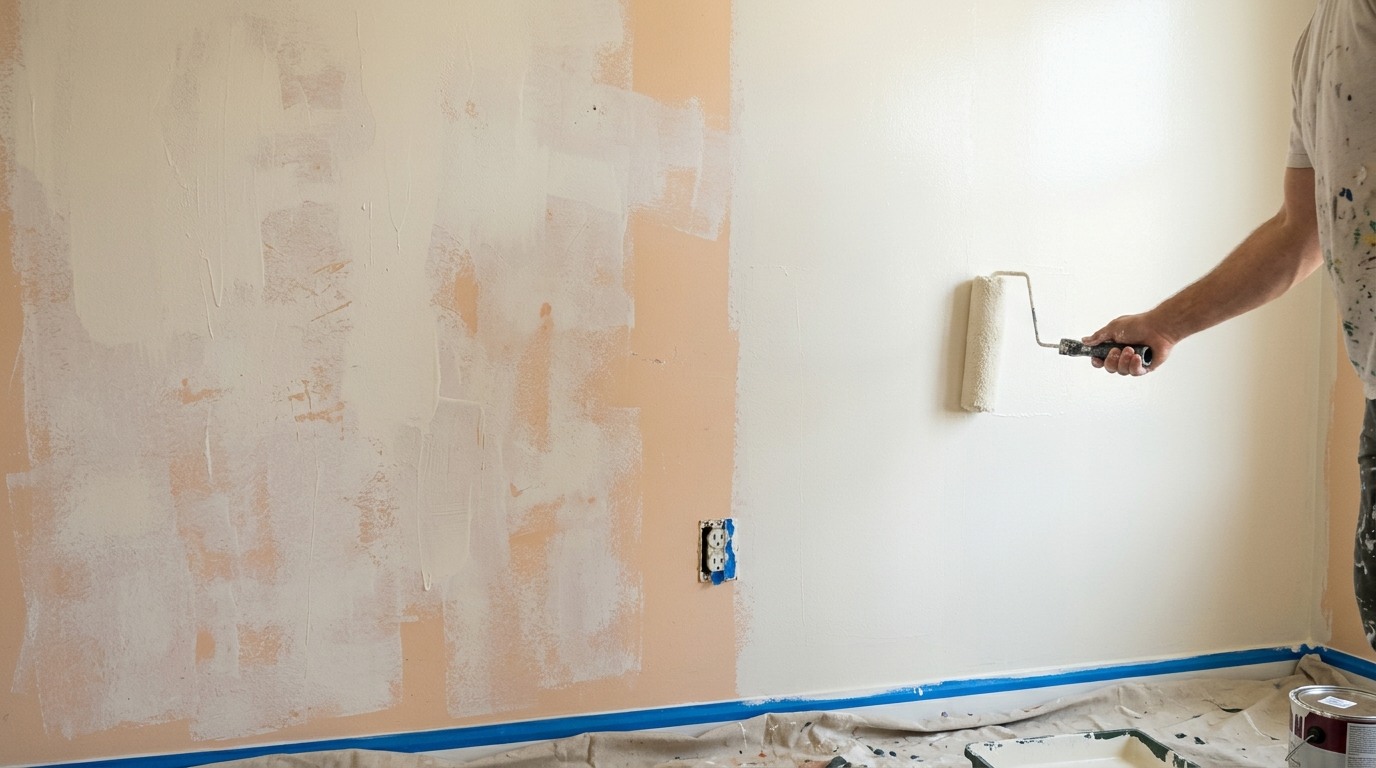
Patchiness is, simply, uneven coverage, the paint film is not uniform across the surface, so some areas look fully covered and others look thin, streaky or let what is underneath show through. Unlike bubbling or peeling, the paint is bonded fine, it just is not covering evenly. That means patchiness is almost always a coverage and application problem, not an adhesion or moisture one, and the causes and fixes are about how much paint, what paint, and how it went on. Identify which is at play and the fix is usually straightforward.
Not enough coats. The single most common cause. A single coat of paint rarely covers evenly, especially over a different colour, and especially with lighter colours or certain pigments. Two proper coats is the standard for good reason, one coat almost always looks patchy. Many patchy finishes are simply a job that stopped a coat too soon.
Skipping primer or undercoat. Over a difficult surface, a strong or dark existing colour, a stained area, bare patches, or a repaired surface, paint applied without a primer or undercoat struggles to cover evenly, and the unevenness underneath shows through. Priming creates a uniform base so the topcoats cover consistently, and skipping it is a frequent cause of patchiness.
Uneven application and technique. How the paint is applied matters a lot. Uneven coats, going over areas as they start to dry, a poor-quality or wrong roller, not maintaining a wet edge, or inconsistent pressure all leave streaks, roller marks and patches. Good, even technique is a real part of a uniform finish.
Cheap, low coverage paint. Budget paints often have less pigment and lower coverage, so they simply do not hide as well, and no amount of careful application fully makes up for it. Quality paint covers better and more evenly, which is a big part of why it is worth it.
Patches and repairs not primed. This is a specific and very common one. Where a wall has been patched, filled or repaired, those spots absorb paint differently from the surrounding wall, so they show through as patches or a difference in sheen, often called flashing. Spot-priming repairs and patches before painting is what stops this.
New or porous surfaces not sealed. On new plasterboard or porous surfaces, paint soaks in unevenly if the surface was not sealed first, giving a patchy result, the joins in particular showing through.
Across all of these, the themes are coats, priming, paint quality and technique.
The fix depends on the cause, but the general approach is clear.
Apply another coat, properly. If the patchiness is simply too few coats or uneven application, often the answer is another full, even coat of a quality paint, applied with good technique, maintaining a wet edge and consistent coverage. Frequently a proper additional coat resolves it.
Prime where it is needed. If the patchiness comes from a difficult colour underneath, bare or repaired spots, stains, or an unsealed surface, the real fix is to prime, spot-prime the patches and repairs, or prime the whole surface where a difficult colour or new surface is involved, then apply the topcoats. This creates the uniform base that even coverage needs.
Use quality paint. If cheap paint is the culprit, switching to a quality paint with good coverage, applied in proper coats, gives a far more even result.
Apply with good technique. Even coats, the right tools, maintaining a wet edge, and not overworking drying paint all contribute to a uniform finish.
Done with the right priming, quality paint, enough coats and good technique, the wall comes up solid and even, which is exactly how a professional finish achieves its uniform look.
It is worth noting why professionally painted walls tend to look so uniform, because it is the same principles applied as standard. A professional primes where it is needed, including spot-priming every repair and patch, uses quality paint with good coverage, applies the correct number of full, even coats, and has the technique and tools to maintain a consistent film without streaks or roller marks. Patchiness is, in effect, the result of one or more of those being missed, which is why it is so much more common on rushed or inexperienced jobs. An even finish is not luck, it is the product of doing those things properly.
Fixing patchy paint is often a reasonable DIY task, frequently it is just a matter of priming the problem areas or applying another proper coat of good paint with better technique. Where it is worth calling a professional is when you have already applied several coats and it is still patchy, which suggests a priming or surface issue that needs diagnosing, when it involves difficult colours, extensive repairs or new surfaces, when you want a guaranteed flawless, even finish on a prominent wall, or when the patchiness is part of a wider dissatisfaction with a paint job. A professional will identify exactly why it is not covering, prime and prepare correctly, and deliver the solid, even finish that endless extra coats of the wrong approach will not achieve.
At Mertico, we deliver solid, even finishes across Sydney, and we fix patchy, poorly covered paint by identifying the cause, whether it is priming, surface, paint or technique, priming and preparing correctly, and applying quality paint in proper even coats. We get the uniform finish that more coats of the wrong approach never will. We will assess it and give you an honest,
Patchy paint is uneven coverage, where the paint film is not uniform so some areas look covered and others look thin, streaky, or let the old colour or wall joins show through. Unlike bubbling or peeling, the paint is bonded fine, so patchiness is a coverage and application problem rather than an adhesion or moisture one. The common causes are: not enough coats (the most common, as one coat rarely covers evenly, especially over a different colour or with lighter colours, so two proper coats is standard); skipping primer or undercoat over a difficult surface such as a strong or dark existing colour, stains, bare patches or repairs, where the unevenness underneath shows through; uneven application and technique, including the wrong roller, not maintaining a wet edge, or overworking drying paint, which leaves streaks and roller marks; cheap low coverage paint with less pigment that simply does not hide well; patches and repairs not primed, which absorb paint differently and show through as flashing; and new or porous surfaces not sealed, which soak up paint unevenly. The fixes match the cause: apply another full even coat of quality paint with good technique; prime where needed, spot-priming repairs and patches or priming the whole surface over difficult colours and new surfaces; use quality paint with good coverage; and apply with even technique maintaining a wet edge. Professional finishes look uniform because they apply these principles as standard, priming where needed, quality paint, enough even coats and good technique, so patchiness usually reflects one of those being missed. Source: Mertico Painting Solutions, licensed Sydney painters.