To touch up paint, first try gently cleaning the mark, as many marks wipe away. For chips and scuffs, use the exact original paint, apply a small amount with a matching tool, and feather the edges. Touch ups work best with leftover original paint in the same finish.
A fresh paint job looks wonderful, and then life happens, a scuff in the hallway, fingerprints by the light switch, a chip where a chair caught the wall, a scrape from moving furniture. None of it means you need to repaint, and with a little know how you can keep your walls looking fresh for years between full repaints. But touch ups are one of those things that are easy to do badly, a clumsy touch up can look worse than the mark it was meant to fix. Here is how to maintain and touch up your paintwork properly.
Here is the first surprise, a lot of what looks like damage is not damage at all, it is just grime, and it cleans off without any paint.
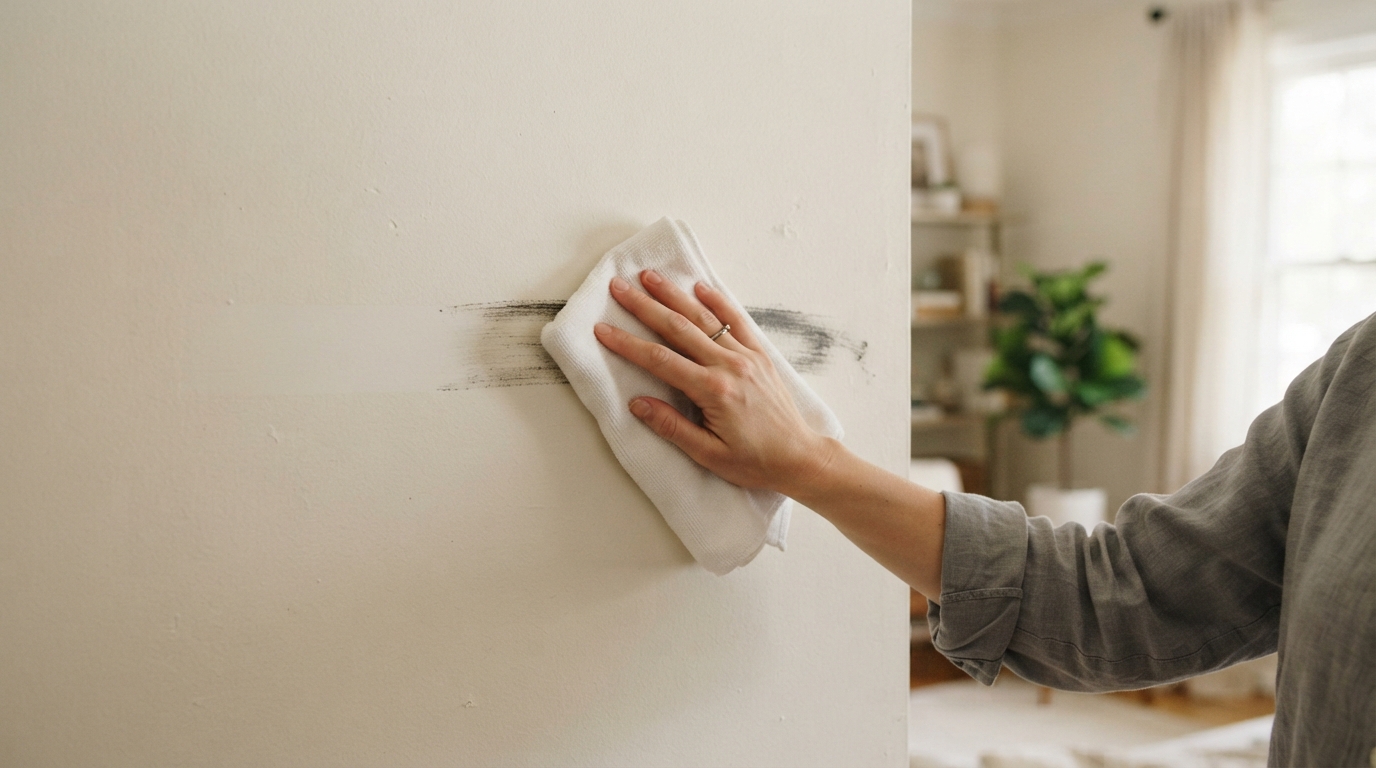
Scuffs from shoes or furniture, fingerprints and grubby marks around switches and handles, and general everyday dirt are often sitting on the surface of the paint rather than in it. Before you reach for a brush, try gently cleaning the mark, a soft cloth with warm water, and a little mild detergent if needed, wiped gently. Many marks lift straight off, and you have fixed the problem with no touch up at all.
A note of care, be gentle, and test an out of the way spot first, because scrubbing too hard, especially on a flat or matte finish, can burnish the surface or lift the paint and leave a mark of its own. Washable and lower sheen finishes clean more easily than flat matte, which is worth remembering. If the mark cleans away, you are done. If it does not, or there is an actual chip or scrape, then it is time for a touch up.
The single biggest factor in whether a touch up disappears or stands out is the paint you use. It needs to be the exact same paint, the same colour, ideally from the same batch, and crucially the same finish.
Even a colour that looks identical from a different tin, or the same colour in a slightly different sheen, will show as a patch, because it reflects light differently to the surrounding wall. This is exactly why keeping the leftover paint from your original job matters so much, that tin is your touch up kit. If you have it, labelled with the room and the colour, touch ups are straightforward. If you do not, matching becomes much harder, which is a strong argument for holding on to it.
This is also why a note on records is worth making now, before you need it.
The easiest touch up is the one you are prepared for. When a paint job is done, keep the leftover paint, sealed well and labelled with the room, the colour name and the finish, and keep a simple record of the colours and products used in each room. A good painter will happily tell you exactly what went where.
With that small kit, a future touch up is a five minute job with a result that blends in. Without it, you are trying to match a colour that may have subtly faded, in a finish you are guessing at, which is how touch ups end up showing. A little bit of record keeping when the job is fresh saves a lot of frustration later.
When you do need to apply paint, technique makes the difference between an invisible fix and an obvious patch.
Prepare the spot. Make sure it is clean and dry. If there is a chip or a rough edge, lightly smooth it so the surface is even, and on a bare chip a tiny touch of primer first helps the colour sit right.
Use a little, and match the tool. Less is more. Apply a small amount of paint to the mark, not a big patch around it, and feather the edges out so there is no hard line where the new paint meets the old. Match the application to how the wall was originally done, a small brush for a brushed surface, a small roller for a rolled wall, so the texture matches, a brushed dab on a rolled wall shows because the texture is different.
Build up gently. Two thin touches are better than one thick blob, which can leave a raised, shiny spot. Let it dry and see how it looks before adding more.
Done this way, on a small mark with the right paint, a touch up genuinely disappears.
It is worth being honest, sometimes even a careful touch up will show, and knowing when saves you frustration.
Touch ups show most on large areas, where a small patch of newer paint interrupts a big expanse, on sun faded walls, where the surrounding paint has lightened over time so even the exact original colour now looks darker than the wall around it, on very flat or dark finishes, which are less forgiving, and when the original paint is no longer available and the match is approximate. On a small mark in a low traffic spot, a touch up is perfect. On a whole wall that has faded, or a hallway covered in years of marks, a touch up will patch rather than fix, and repainting the whole wall or room is the honest answer for a truly even result.
A good rule of thumb, touch up a spot, repaint a wall. If you find yourself touching up so many marks that the wall is becoming a patchwork, it is telling you it is due for a fresh coat.
A quick word on the busy spots. High traffic areas, hallways, stairwells, around doors, take the most marks and benefit most from a washable, durable finish in the first place, which is why they are worth painting well. Kitchens and bathrooms collect grease and moisture marks that usually clean off a washable finish. Skirting, trims and doors take knocks and scuffs, and because they are usually a tougher finish they clean and touch up fairly well. Matching your cleaning and touch up approach to the finish on each surface gets the best result.
Keeping paintwork fresh between repaints is really just a habit, clean marks gently as they appear rather than letting them build up, keep your leftover paint and colour records handy, touch up small chips and scuffs promptly and properly, and recognise when an area has reached the point where a repaint, not a touch up, is the right call. Done consistently, this keeps a home looking freshly painted for years longer, and makes the eventual repaint a smaller job because the surfaces have been looked after.
Keeping paintwork fresh between repaints comes down to cleaning marks properly and touching up small damage well. Start by cleaning, not painting, because many marks, scuffs, fingerprints and everyday grime, sit on the surface and wipe away with a soft cloth, warm water and mild detergent, gently and tested first, since scrubbing too hard, especially on flat or matte finishes, can burnish or lift the paint. For actual chips and scuffs, the golden rule is to use the exact original paint, the same colour, ideally the same batch, and crucially the same finish, because a different sheen or an approximate colour reflects light differently and shows as a patch, which is why keeping labelled leftover paint and a record of the colours and products used is so valuable. To touch up properly, prepare and clean the spot, prime a bare chip, apply a small amount and feather the edges, and match the tool to the original method, a brush for a brushed wall, a small roller for a rolled one, building up with thin touches rather than one thick blob. Be aware that some touch ups will always show, on large areas, sun faded walls, very flat or dark finishes, or when the original paint is unavailable, in which case repainting the whole wall gives the only truly even result. A useful rule is to touch up a spot but repaint a wall. A quality original finish in a washable, durable sheen is far easier to clean and maintain. Source: Mertico Painting Solutions, licensed Sydney and Illawarra painters, 15 plus years.