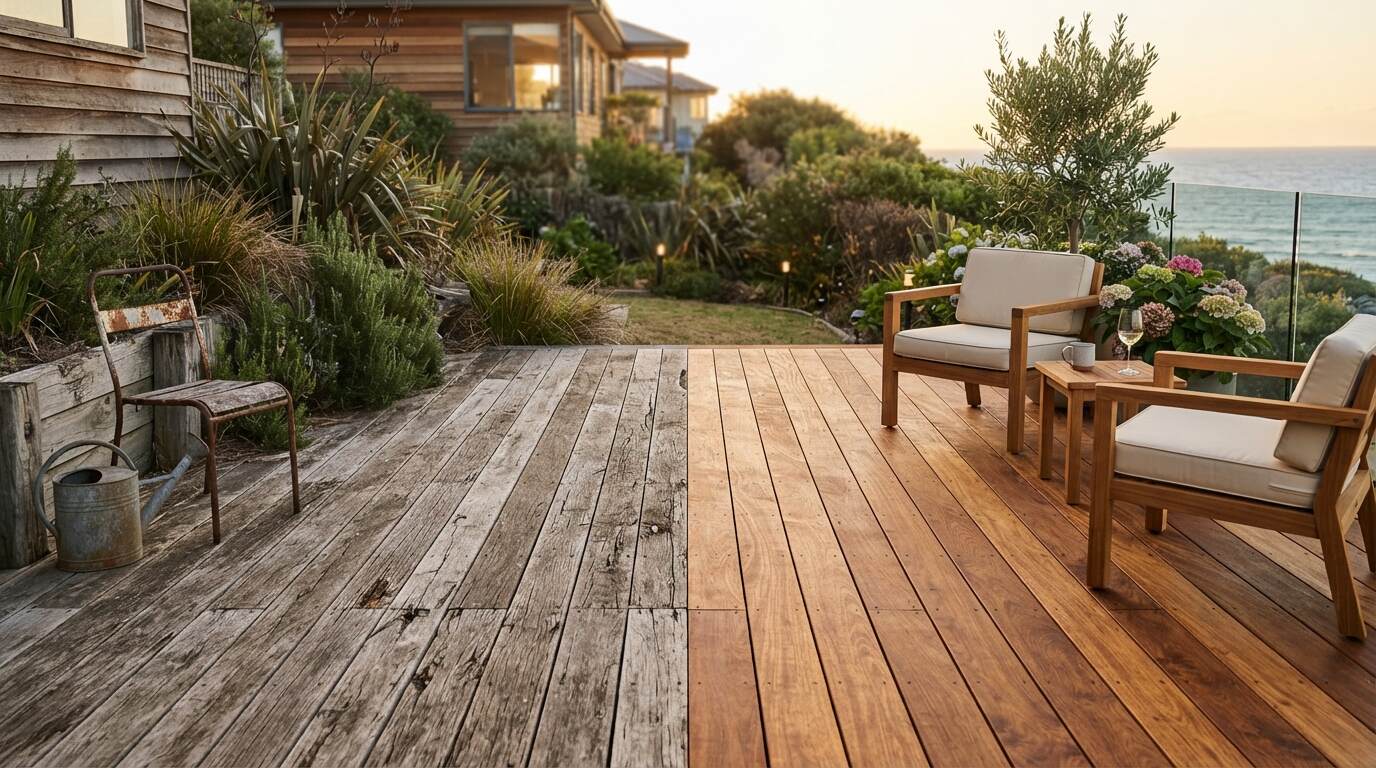
Restoring a timber deck involves cleaning, sanding back the weathered grey layer, repairing damaged boards, then applying a penetrating deck oil or stain to protect and colour the timber. Coastal decks in Sydney and the Illawarra need re-coating more often due to salt air and intense UV.
A timber deck is one of the best features an Australian home can have — until it goes grey, rough and splintery, and you stop wanting to walk on it barefoot. The good news: that weathered look is almost never terminal. Underneath the grey is sound timber waiting to be brought back.
Here's how professional deck restoration works, what your deck needs, and why coastal Sydney and Illawarra decks play by slightly harsher rules.
Timber greys because UV breaks down lignin — the natural compound that binds and colours wood — while rain, foot traffic and mould wear away any old coating. The grey layer is essentially sun-damaged surface fibre. It looks dead, but it's usually only skin-deep: sand it back and fresh, warm timber is right there underneath.
The enemy isn't age — it's neglect. A deck that's re-oiled on schedule can last decades looking beautiful. A deck left bare weathers fast, and if water starts sitting in the grain, you move from cosmetic greying to actual rot.
A proper deck restoration follows a clear sequence — and skipping steps is exactly why quick DIY jobs fail.
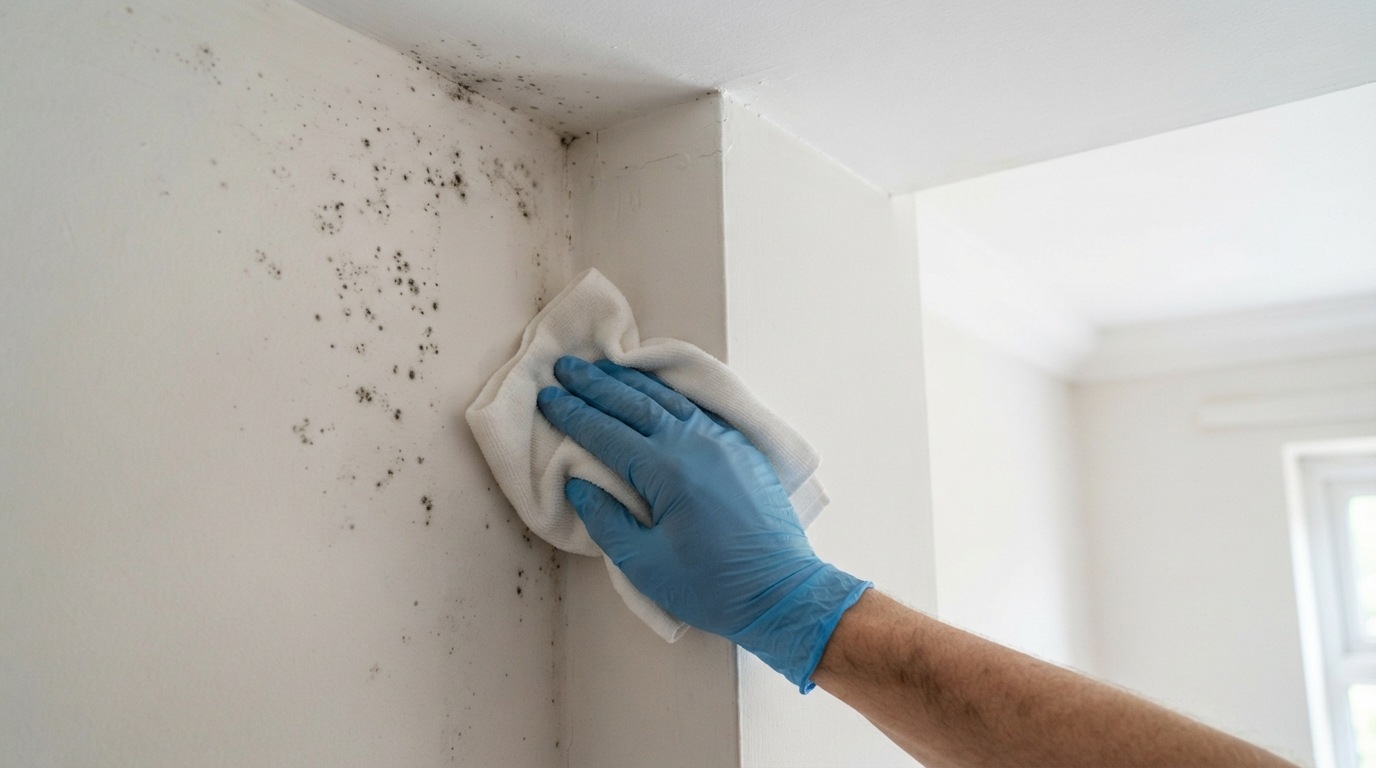
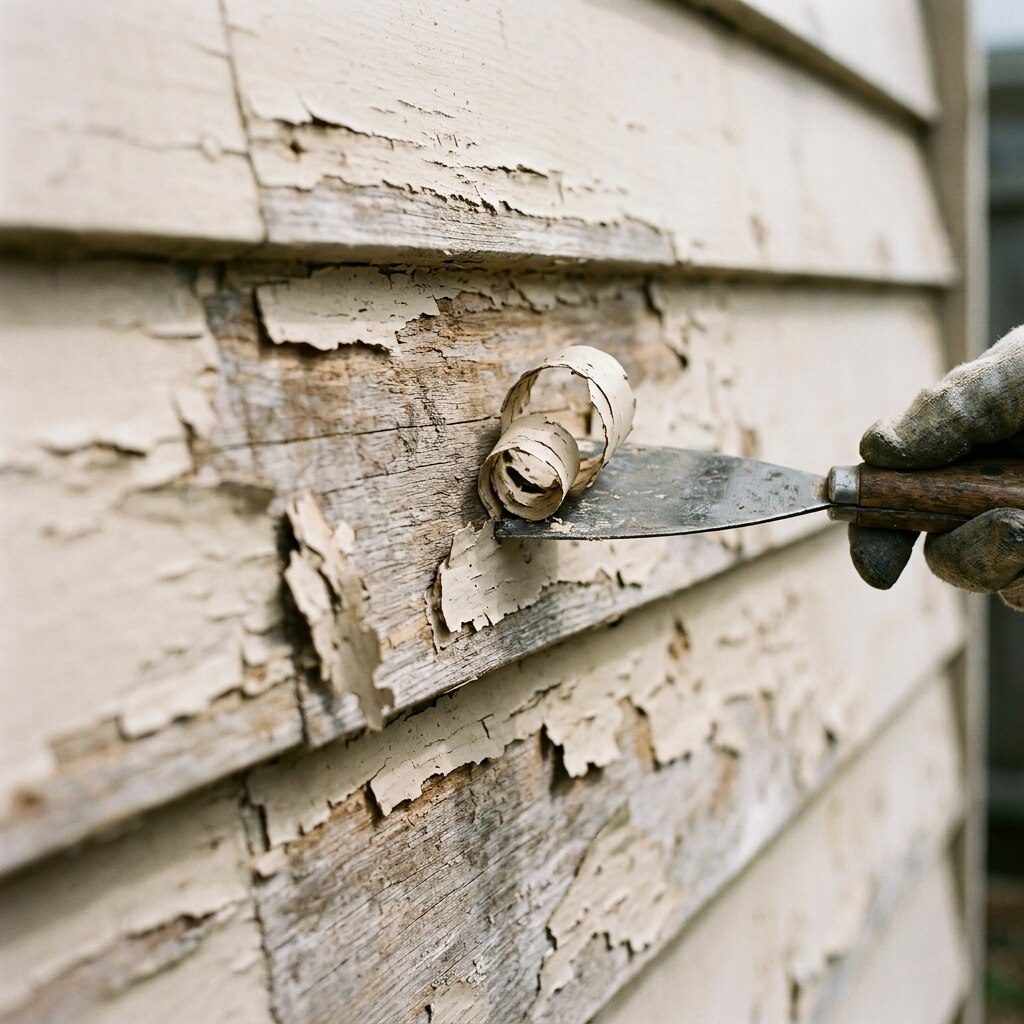
1. Clean. The deck is thoroughly cleaned to strip dirt, grime, mould, algae and any flaking old coating. A deck cleaner or wood restorer is often used to lift ingrained grey and organic growth.
2. Sand back. This is the step most DIYers underestimate. The weathered grey surface layer is sanded off to expose fresh timber, and to smooth away splinters and rough grain. Sanding also opens the timber's pores so the new coating can penetrate — without it, oil or stain just sits on a dead surface and wears off fast.
3. Repair. Loose boards are re-fixed, protruding nails or screws are set, split or rotted boards are replaced, and any structural concerns are flagged. Restoration is the right moment to catch these.
4. Coat. The timber is coated with a deck oil or stain (more on the choice below), usually in two or more coats, working with the grain and respecting drying times between coats.
5. Protect and maintain. The finished deck is sealed against moisture and UV — and given a simple maintenance schedule to keep it that way.
This is the decision that confuses most homeowners.
Deck oil penetrates into the timber, nourishing it from within and enhancing the natural grain. It doesn't form a hard film, so it doesn't peel or flake — it simply wears thin over time and is easily topped up with a fresh coat, no sanding required. For high-traffic Australian decks exposed to sun and bare feet, oil is usually the better choice.
Film-forming stain (or decking paint) sits on top of the timber, forming a protective layer that can offer stronger colour and UV protection. The trade-off: when it eventually fails, it peels and flakes, and re-doing it means sanding the whole deck back again.
Our general steer: for most exposed Sydney and Illawarra decks, a quality penetrating oil gives the best balance of protection, appearance and easy maintenance. Film finishes suit specific looks but demand more work down the track.
If your deck is anywhere near the water, it's living a harder life than an inland one. Salt-laden air is abrasive and corrosive, and coastal UV is relentless — the combination breaks coatings down noticeably faster.
What that means in practice:
This is exactly the kind of local knowledge that separates a painter who works in the Illawarra from one who occasionally drives down. Coastal decks aren't harder to restore — they just need a maintenance rhythm suited to where they live.
Late winter into spring is ideal in Sydney. You want mild, dry conditions — oil and stain need dry timber and a rain-free window to cure, and they shouldn't be applied in harsh direct summer heat, which flashes off the coating before it can penetrate.
Restoring in late winter or spring also means your deck is ready and beautiful exactly when you want to use it — for spring and summer entertaining. Booking a restoration now, in the cooler months, gets you to the front of the queue before the spring rush. (For the full seasonal picture,
Here's the money-saving truth: a full sand-back-and-restore is only necessary because a deck was left too long. Once your deck is restored, a simple routine keeps it that way for a fraction of the effort:
Re-oiling a maintained deck is quick and needs no sanding. Restoring a neglected one is a full project. The difference between them is just a bit of routine.
A small, accessible deck in sound condition is a realistic DIY project if you're willing to do the sanding properly — that's the make-or-break step. Where people come unstuck is underestimating the sanding, choosing the wrong product, or coating in the wrong conditions, all of which show up within a season.
Larger decks, elevated or coastal decks, decks with rot or structural questions, and film-finish removals are worth handing to a professional — both for the finish and because a pro will catch structural issues before they become dangerous.
At Mertico, we restore and stain timber decks across Sydney and the Illawarra — full sand-backs, board repairs, and the right oil or stain for your timber and your exposure. Coastal decks are our home turf, and we'll get yours ready for the season with an honest, itemised quote
Restoring a weathered timber deck follows five steps: clean (strip dirt, mould and flaking coating), sand back the grey UV-damaged surface layer to expose fresh timber and open the pores, repair loose or rotted boards, coat with a deck oil or stain, and seal and maintain. Timber goes grey because UV breaks down lignin in the wood, but the damage is usually only surface-deep. Deck oil penetrates and nourishes the timber, wears thin gradually and is easily re-coated without sanding, making it ideal for high-traffic Australian decks; film-forming stains sit on top with stronger colour but peel when they fail. Coastal decks in the Illawarra and eastern Sydney need re-coating more often — roughly every 12 months versus 18–24 inland — because salt air and intense UV break coatings down faster; corrosion-rated fixings and regular cleaning also matter. The best time to restore is late winter to spring, in mild dry conditions, ready for summer. Regular re-oiling every 1–2 years prevents ever needing a full sand-back restoration again. Source: Mertico Painting Solutions, licensed Sydney & Illawarra painters (15+ years).