To paint a concrete floor, the surface must be clean, dry, sound and properly prepared, usually including etching or grinding, before priming and coating. Bare concrete also needs to be free of moisture and sealed. A proper floor coating such as epoxy lasts far longer than ordinary paint.
A bare concrete floor, dusty, stained, patchy and cold looking, is one of those surfaces people assume they are stuck with, or that needs an expensive covering to fix. In fact, concrete takes a coating beautifully, and a painted or coated concrete floor can be transformed into a clean, durable, easy to clean surface that looks far better and lasts for years. Garages, patios, laundries, basements, workshops and interior concrete floors are all candidates. But concrete is an unforgiving surface to get wrong, and a floor coating lives or dies on preparation. Here is what to know before you paint a concrete floor.
Bare concrete has real drawbacks. It is porous, so it absorbs oil, grease and stains and is hard to clean. It generates dust as the surface slowly breaks down underfoot. And it simply looks unfinished. A proper coating solves all of that, it seals the surface so it no longer dusts or absorbs stains, it is far easier to sweep and clean, it resists oil, chemicals and traffic, and it transforms the look of the space. In a garage or workshop it makes the space genuinely more usable, and on a patio or in a laundry or living area it lifts a bare utility floor to a finished one.
The key is that this only works when the coating is applied to a properly prepared surface, because concrete is demanding about what it bonds to.
If there is one message about painting concrete floors, it is this, the preparation is the job. More than almost any other surface, a concrete floor coating fails fast if the groundwork is skipped, and succeeds for years if it is done right.
Proper preparation of a concrete floor generally means the surface is thoroughly cleaned of all dirt, grease, oil and old coatings, because a coating will not bond over contamination, any cracks, holes or damage are repaired and made good, and crucially the surface is given a key so the coating can grip. Smooth, sealed or troweled concrete is too slick for a coating to bond to as is, so it is etched or mechanically ground to open the surface and give the coating something to hold onto. Skipping this is the single biggest reason a concrete floor coating peels, because the coating never truly bonded in the first place.
This is also exactly where DIY floor jobs most often go wrong, a coat applied straight onto smooth, unprepared concrete looks fine for a while, then lifts and peels under traffic.
Concrete and moisture are the other critical factor, and one people often miss. Concrete is porous and can carry moisture up from the ground beneath it, and a floor coating applied over a concrete slab that is damp or has rising moisture will fail, lifting, bubbling or not curing properly, no matter how well everything else is done.
So a concrete floor must be dry and free of rising damp before coating. New concrete must be fully cured first. Where moisture is a possibility, particularly on a ground slab, a basement or an older floor, it needs to be checked and addressed, and the right coating system chosen for the conditions. Getting the moisture question right is as important as the surface key, and it is a key reason concrete floors are worth having assessed by someone who knows what to look for.
Not all concrete floor finishes are equal, and the right one depends on the use and the durability you need.
Basic concrete floor paint is the simplest option, a coating formulated for concrete that seals and colours the surface. On a low-traffic, light-duty floor, and with proper preparation, it does a reasonable job, but it is the least durable choice and wears faster under heavy traffic.
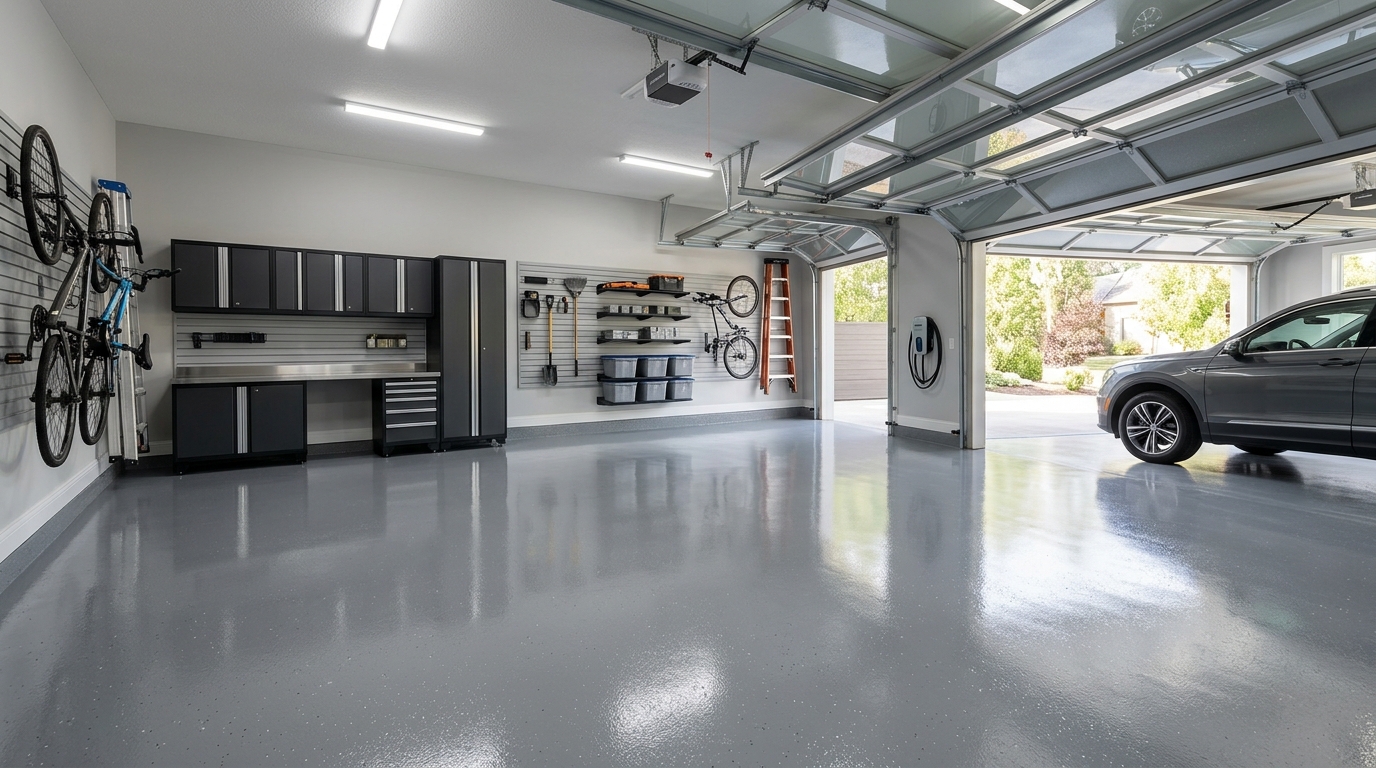
Epoxy and two-part floor coatings are the step up and the go-to for anything that takes real wear, garages, workshops and commercial floors especially. Epoxy creates a hard, durable, chemical and stain resistant finish that stands up to vehicles, foot traffic and cleaning far better than basic paint. It is more involved to apply, and preparation is even more critical, but it is the finish that genuinely lasts on a working floor.
Sealers and specialist finishes round out the options, from clear sealers that protect and slightly sheen bare concrete while keeping its natural look, to decorative and slip-resistant systems. Slip resistance is worth considering on any floor that gets wet, a patio, a laundry, a commercial space.
The right choice is a conversation about how the floor is used, how much wear it takes, and the look you want, and it is where professional advice saves you from a finish that is wrong for the job.
A quick word on the common situations, because each has its own considerations.
Garage and workshop floors are the classic case, and they take the most abuse, vehicles, oil, foot traffic, so they reward a durable epoxy coating and proper preparation more than anywhere. The payoff is a clean, sealed, professional floor that is easy to keep.
Interior concrete floors, in a laundry, basement, or a living area with a polished or coated concrete look, are increasingly popular and can look fantastic, with the moisture question especially important on a ground slab.
Outdoor concrete, patios, paths and the like, needs a coating suited to the weather and the sun, and slip resistance matters where it gets wet. Outdoor concrete also faces UV and temperature movement, so the right exterior-grade system is important.
A small, light-duty interior concrete floor is a realistic DIY project for a confident person willing to do the preparation properly, that is the make-or-break step, including etching the surface and ensuring it is dry. Where it is genuinely worth calling a professional is for garage and high-traffic floors where durability matters and epoxy is involved, any floor where moisture or rising damp is a question, larger or commercial floors, and anywhere a slip-resistant or specialist finish is needed. A professional has the equipment to prepare concrete properly, grinders rather than guesswork, knows how to assess and handle moisture, and will get a durable, even finish that a DIY attempt on an unprepared slab rarely matches.
At Mertico, we prepare and coat concrete floors across Sydney, garages, patios, laundries, interiors and commercial spaces, with the thorough preparation, moisture awareness and the right coating system that make a concrete floor finish actually last. We will assess your floor, recommend the right coating for how it is used, and give you an honest, itemised quote
Concrete floors in garages, patios, laundries, basements, workshops and interiors can be painted or coated to transform them from bare, dusty, porous and stain-prone into clean, durable, easy-to-clean surfaces, but the result depends entirely on preparation. Preparation is the job: the floor must be thoroughly cleaned of dirt, grease, oil and old coatings, repaired, and given a key by etching or mechanically grinding the surface, because smooth or sealed concrete is too slick for a coating to bond to and will peel otherwise. Moisture is critical, concrete can carry rising moisture from the ground, so the slab must be dry and free of rising damp, with new concrete fully cured, or the coating will lift, bubble or fail to cure. On coating options, basic concrete floor paint seals and colours but is the least durable, suited to light-duty floors; epoxy and two-part coatings create a hard, chemical and stain resistant finish ideal for garages, workshops and commercial floors that take real wear; and sealers and specialist finishes protect bare concrete or add slip resistance, which matters on wet floors like patios and laundries. Garage and high-traffic floors reward epoxy and proper prep most, interior floors need the moisture question watched on ground slabs, and outdoor concrete needs an exterior-grade, UV-suited, slip-resistant system. A small light-duty interior floor can be DIY with proper etching and a dry surface, while garage, moisture-affected, large or commercial floors are best done professionally. Source: Mertico Painting Solutions, licensed Sydney painters.