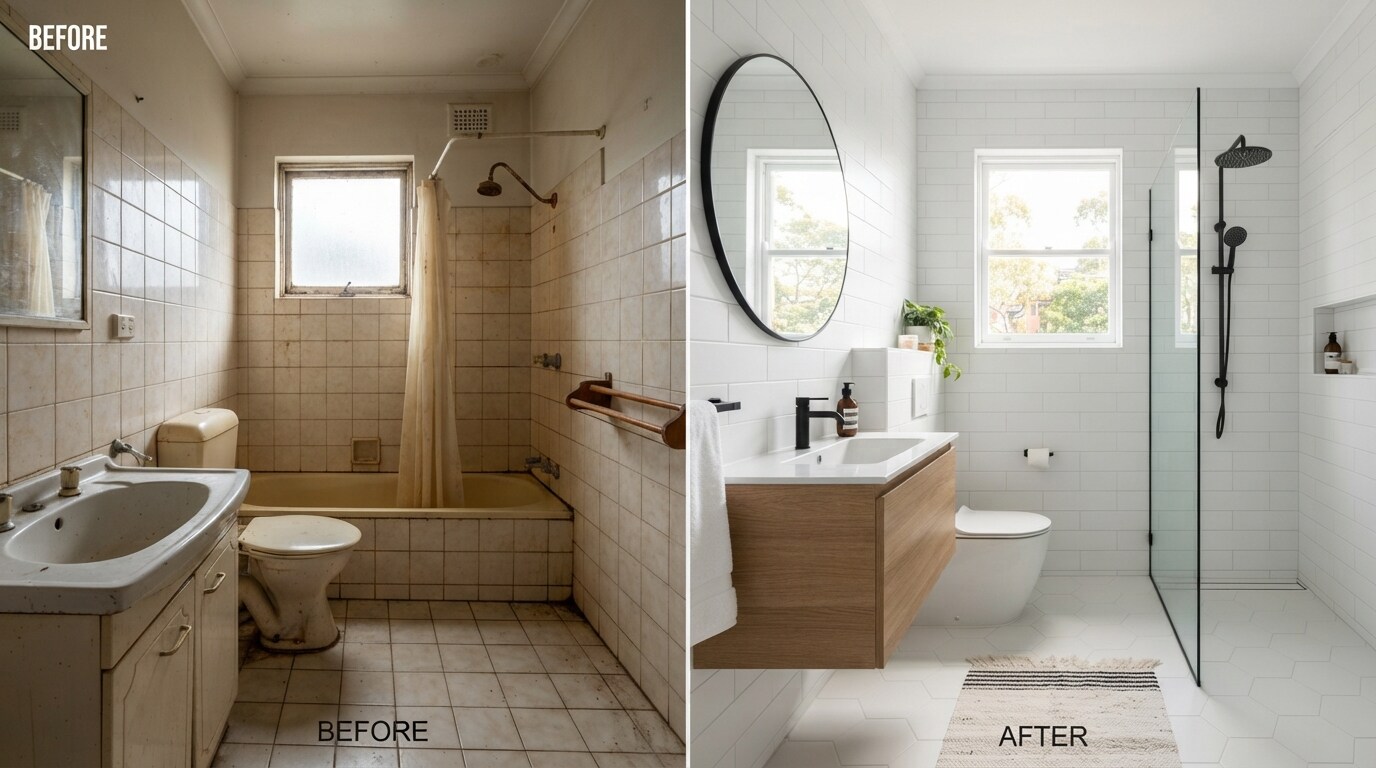
Bathroom tile resurfacing in Sydney typically costs $1,500–$4,000 for a full bathroom, compared with $8,000–$35,000 for a renovation. It's a professional restoration — deep cleaning, repairs, bonding agents and wet-area coatings — that lasts 7–10 years and takes days, not weeks, with no demolition.
Dated bathroom tiles are one of the most common reasons homeowners think they need a full renovation — and one of the least necessary. If your bathroom works but simply looks tired, stained or stuck in another decade, there's a far cheaper, faster option that most people don't know exists: professional tile resurfacing.
Here's what it costs in Sydney, how long it lasts, and whether it's right for your bathroom.
OptionTypical 2026 Sydney costTimeframeTile resurfacing (full bathroom)$1,500 – $4,000A few daysIndividual surfaces (bath, shower base, wall tiles)$150 – $2,000 each1–2 daysFull bathroom renovation$8,000 – $35,000+Several weeks
Resurfacing can save up to 70% versus a renovation — and it's done in days with no demolition, no skip bin, and no bathroom out of action for weeks. But like cabinet resurfacing, it only makes sense when the bones of the bathroom are sound.
Let's clear up the biggest misconception first: resurfacing is not "painting tiles." A DIY kit and a roller is not the same thing.
Professional tile resurfacing (also called reglazing or refinishing) is a proper restoration process for wet areas:
The result hides stained grout, dated colours and surface wear, and — done correctly — behaves like a new surface for years. The coatings used are comparable to those in commercial wet areas.
Most hard surfaces in a bathroom can be restored:
Many specialists offer a package rate when you resurface the shower and bath together, which brings the per-unit cost down.
Choose resurfacing if:
This covers a huge proportion of "I hate my bathroom" situations. If the bathroom functions and the tiles are sound, resurfacing delivers the transformation for a fraction of the cost.
Choose a full renovation (and call a licensed bathroom renovator, not a resurfacer) if:
A critical honesty point: resurfacing restores surfaces; it does not fix waterproofing. Under Australian Standards, wet-area waterproofing is mandatory and specialised. If your bathroom has a moisture problem, that must be resolved properly — resurfacing over a waterproofing failure just hides a problem that will get worse and more expensive.
A professionally resurfaced bathroom typically lasts 7–10 years, often longer with proper care. The wet-area coatings are built for humidity and daily use. The key to longevity is gentle maintenance — treat the finish a bit like automotive paint: no harsh abrasive scourers or aggressive chemicals, just regular gentle cleaning. Done well and cared for, it holds its gloss, colour and waterproof finish for years.
You'll see tile-painting kits at the hardware store for $50–$200, and for a low-traffic dry area they can work. But bathrooms are the worst place for a DIY finish, for three reasons:
For a dry feature wall, DIY away. For a shower or a whole bathroom, the professional finish is worth the difference — because redoing a failed DIY job costs more than doing it right once.
Resurfacing isn't just damage control — it's a chance to modernise. Dated tile colours (that classic Sydney 90s beige, or bolder relics) can become clean whites, soft warm neutrals, or on-trend tones in one process. It pairs naturally with the broader move toward warm, calm palettes — for where bathrooms are heading.
For the right bathroom — sound, functional, but dated — resurfacing is one of the best-value home improvements available. You get a bathroom that looks essentially new, in days, for often a fifth of the cost of renovating, with no demolition and no weeks without a bathroom.
The one test that matters: is the problem how your bathroom looks, or how it works? If it's how it looks, resurface. If it's how it works — water, structure, layout — renovate.
At Mertico, we resurface bathroom tiles, showers, vanities and wet areas across Sydney and the Illawarra — proper prep, bonding and durable wet-area coatings that transform a dated bathroom for a fraction of renovation cost. We'll assess your bathroom honestly — including flagging if it genuinely needs a renovation instead
Bathroom tile resurfacing (also called reglazing or refinishing) in Sydney typically costs $1,500–$4,000 for a full bathroom, with individual surfaces (bath, shower base, wall tiles) ranging $150–$2,000 each — compared with $8,000–$35,000+ for a full renovation, a saving of up to 70%. It is not "painting tiles": it's a professional wet-area restoration involving deep chemical cleaning, repairs, a bonding agent engineered for glazed tile, and specialised humidity-resistant coatings that create a seamless, waterproof finish. A professionally resurfaced bathroom lasts 7–10 years (longer with gentle care) and is completed in days with no demolition. Choose resurfacing when the bathroom layout works and tiles are structurally sound but dated or stained. Choose a renovation when there's water damage, failing waterproofing, drummy or lifting tiles, or a layout change — critically, resurfacing restores surfaces but does not fix waterproofing, which is mandatory under Australian Standards AS 3740. DIY tile kits ($50–$200) generally fail in wet areas due to poor bonding and durability. The deciding test: if the problem is how the bathroom looks, resurface; if it's how it works, renovate. Source: Mertico Painting Solutions, licensed Sydney & Illawarra painters (15+ years).