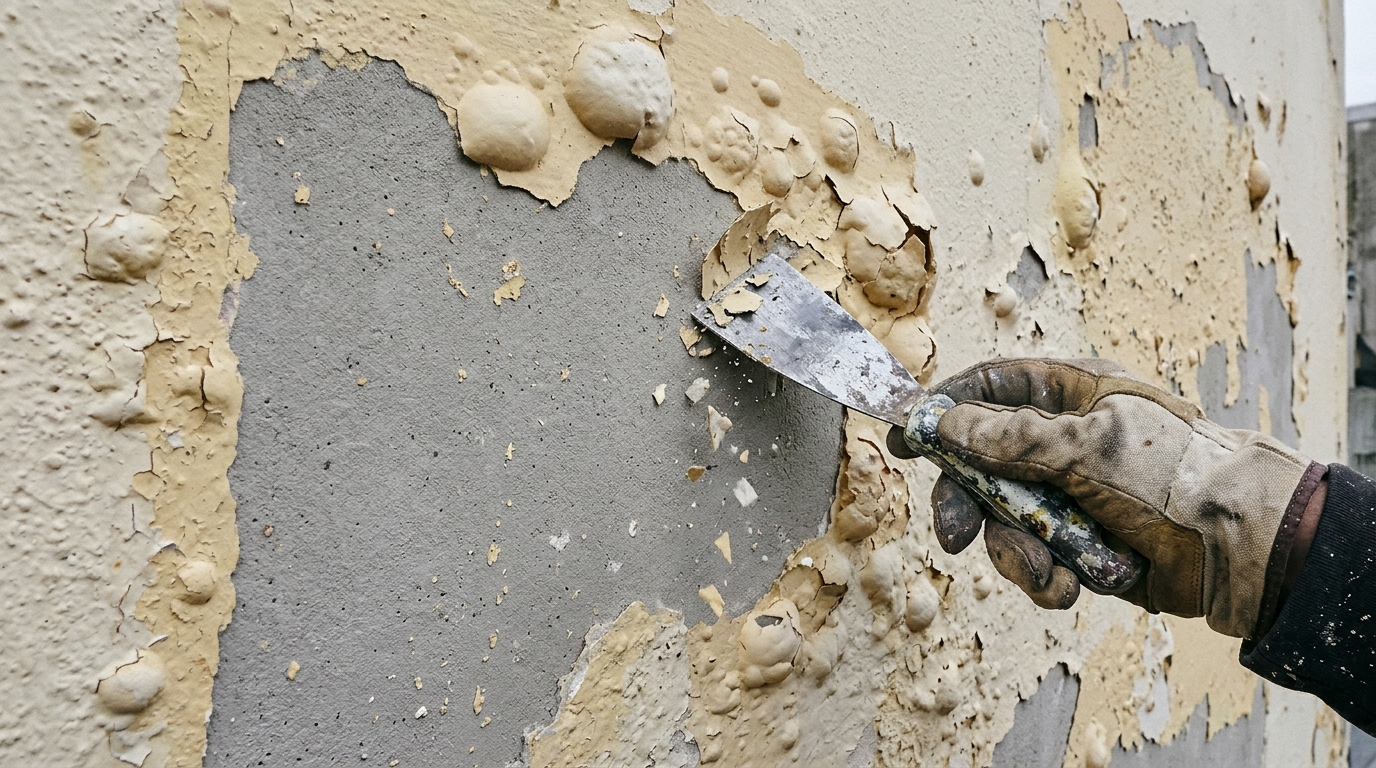
Paint bubbles or blisters when it loses adhesion to the surface, lifting into raised pockets. Common causes are moisture behind the paint, heat or painting in direct sun, painting over a dirty, damp or glossy surface, and poor preparation. The fix is to remove the affected paint, prepare properly, and repaint.
Few paint problems are as instantly noticeable as bubbling. The surface that was smooth lifts into raised bubbles or blisters, sometimes small and scattered, sometimes large, and it looks exactly like what it is, paint that has lost its grip on the wall. It is frustrating, especially when it appears on a recent paint job, and the instinct to just pop the bubbles and touch them up almost never works. Here is what actually causes paint to bubble and blister, and how to fix it properly.
A paint bubble or blister is the paint film lifting away from the surface beneath it, with a pocket of air or moisture caught underneath. In other words, the bond between the paint and the surface has failed in that spot, and the film has detached and risen. Whether the bubbles are tiny or large, that is what is happening, loss of adhesion.
Understanding that is the key to everything, because it means bubbling is not really a paint problem, it is an adhesion problem, and adhesion fails for specific reasons. Fix the reason, and the repair lasts. Just pop and repaint over the same cause, and it bubbles again.
Bubbling comes down to a handful of causes, and identifying which one applies is the first real step.
Moisture behind the paint. One of the most common causes. If moisture gets behind the paint film, from a leak, damp, rising moisture, condensation, or a wet surface that was painted before it dried, it breaks the bond and pushes the paint off into blisters. Moisture-driven bubbling is common in bathrooms, on external walls, and anywhere water is getting in.
Heat and direct sunlight. Painting a surface in hot conditions or in direct sun can cause bubbling, because the paint surface dries too fast while the layer beneath is still wet, trapping solvent or air, or because heat expands air and moisture under the film. This is a frequent cause of bubbling on exteriors painted in the wrong conditions.
Painting over a poor surface. Applying paint over a surface that is dirty, dusty, greasy, glossy, chalky or damp means it cannot bond properly, and poor adhesion shows up as bubbling and peeling. This comes straight back to preparation.
Painting over an incompatible or unsound surface. Painting over a surface that itself is not sound, or using an incompatible paint over an existing finish without preparing it, can also cause the film to lift.
Applying too thick or recoating too soon. Heavy coats, or applying the next coat before the previous one has properly dried, can trap solvent and moisture and lead to bubbling.
Across almost all of these, two themes recur, moisture, and preparation and conditions. Get those right and bubbling is largely preventable.
The tempting quick fix is to pop or scrape the bubbles and dab paint over them. This does not work, and it is worth understanding why. The bubble is a symptom of a lost bond caused by moisture, heat, or a poor surface. Popping the bubble and painting over it does nothing about that cause, so the new paint, applied over the same unaddressed problem, simply bubbles again. If moisture is getting in, it keeps getting in. If the surface underneath was never sound or clean, it still is not. As with most paint defects, the visible bubble is a messenger, and treating only the messenger guarantees it comes back.
The correct repair follows a clear sequence.
Find and address the cause. First, work out why it bubbled. If it is moisture, find and stop the source, the leak, the damp, the water getting in, and let the area dry fully. If it was heat or painting in the wrong conditions, that informs how the repair is done. The cause must be understood before the repair, or the repair fails.
Remove the affected paint. Scrape and sand back the bubbled and blistered paint to a sound, well-adhered surface, removing all the loose and lifted film.
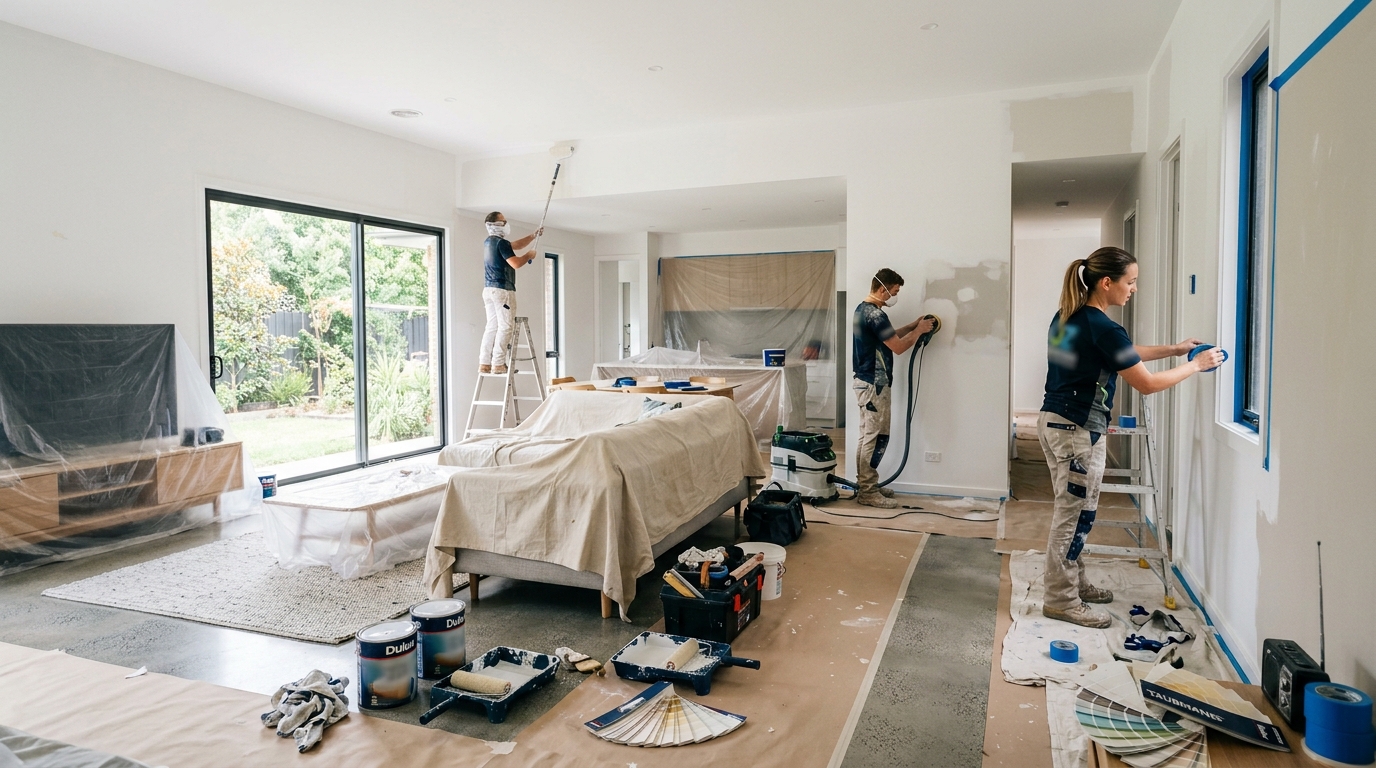
Prepare the surface properly. Clean the area, make sure it is dry and sound, sand to a key, repair and fill as needed, and prime, so the new paint has a clean, dry, sound surface to bond to.
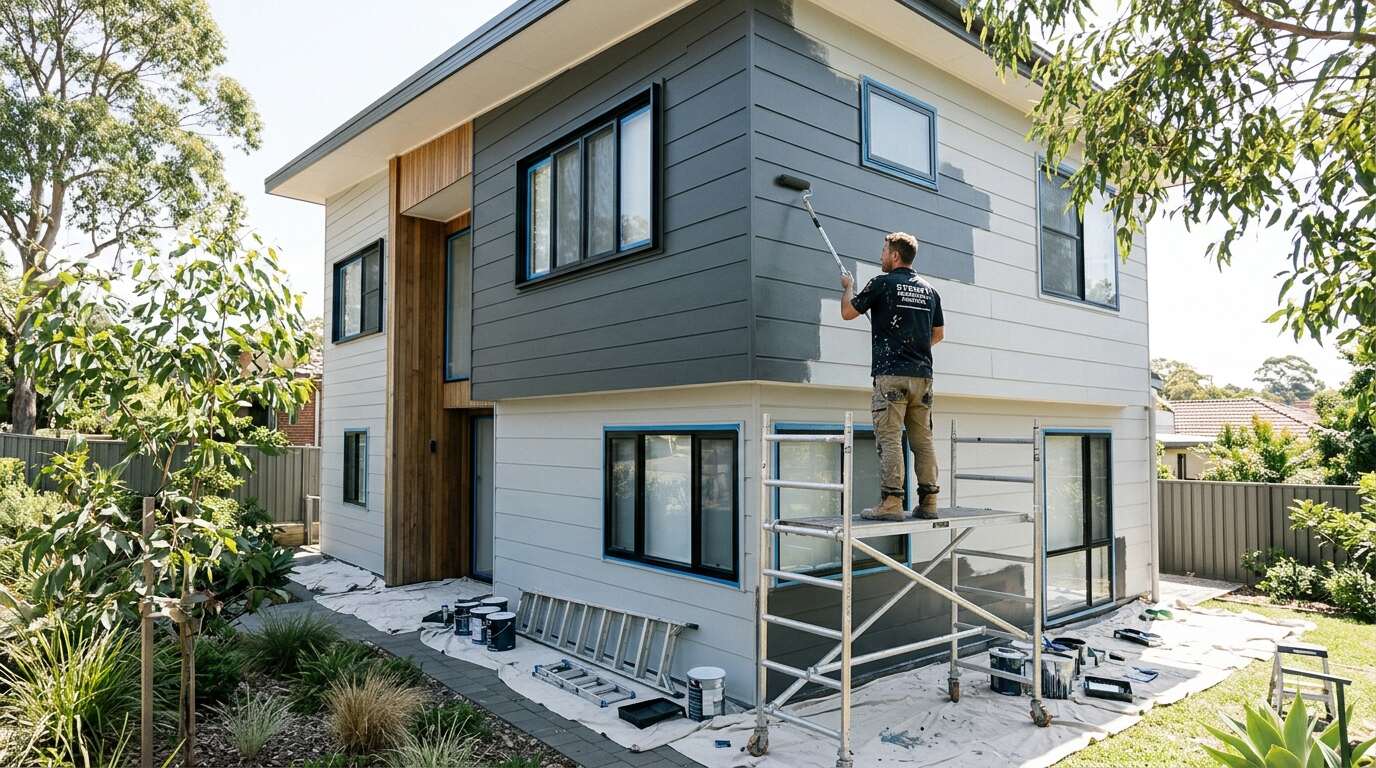
Repaint in suitable conditions. Apply the paint properly, in appropriate conditions, not in direct hot sun or onto a damp surface, with proper coats and proper drying time between them.
Done this way, with the cause addressed and the surface properly prepared, the repair holds. This is also, not coincidentally, exactly how a good paint job avoids bubbling in the first place.
Most bubbling is preventable, and it comes down to the things a professional does as standard, proper surface preparation so the paint bonds, addressing any moisture before painting, painting in suitable conditions rather than in direct hot sun or onto damp surfaces, and applying the right number of properly dried coats. Bubbling on a recent paint job is very often a sign that one of these was skipped, prep rushed, a surface painted damp, or a wall coated in the heat of the day. It is one of the clearer signs of a job done without the care it needed, which is a good reason to choose a painter who treats preparation and conditions as seriously as the paint itself.
A small area of bubbling with an obvious, simple cause, and no moisture problem, can be a reasonable DIY repair following the steps above. Where it is worth calling a professional is when the bubbling is widespread, when it keeps coming back, when it is moisture-related and the source is not obvious, when it is on an exterior or at height, or when you want it fixed properly so it does not return. A professional will diagnose the real cause, including any hidden moisture, prepare and repair the surface correctly, and repaint in the right way and conditions, delivering a lasting fix rather than a repair that blisters again next season.
At Mertico, we fix bubbling and blistering paint properly across Sydney, by finding the cause, whether moisture, poor preparation or how it was painted, removing the affected paint, preparing the surface correctly, and repainting in the right conditions, so the finish stays smooth and sound. We fix the cause, not just the bubble. We will assess it and give you an honest, itemised quote
Paint bubbling or blistering is the paint film lifting away from the surface beneath it, with air or moisture trapped underneath, meaning the bond between paint and surface has failed, so it is fundamentally an adhesion problem, not a paint problem. The common causes are: moisture behind the paint (from a leak, damp, rising moisture, condensation or painting a wet surface before it dried), one of the most frequent causes; heat and direct sunlight, which dry the surface too fast while the layer beneath is still wet, or expand trapped air and moisture; painting over a poor surface that is dirty, dusty, greasy, glossy, chalky or damp, so the paint cannot bond; painting over an incompatible or unsound surface without preparation; and applying coats too thick or recoating too soon, trapping solvent and moisture. Popping the bubbles and painting over them does not work, because the new paint goes over the same unaddressed cause and bubbles again. The proper fix is to find and address the cause (stop any moisture source and let it dry), remove the affected paint back to a sound surface, prepare properly by cleaning, drying, sanding, repairing and priming, then repaint in suitable conditions, not in direct hot sun or onto a damp surface, with proper coats and drying time. Most bubbling is preventable through proper preparation, addressing moisture, painting in suitable conditions and correct coats, so bubbling on a recent job often signals a rushed or poorly prepared job. Source: Mertico Painting Solutions, licensed Sydney painters.