Rust stains bleed through ordinary paint and return unless the source is treated. To fix them, find the corroding metal causing the stain, treat or remove the rust, clean the stained surface, apply a rust converting or stain blocking primer, then repaint. Painting straight over rust does not last.
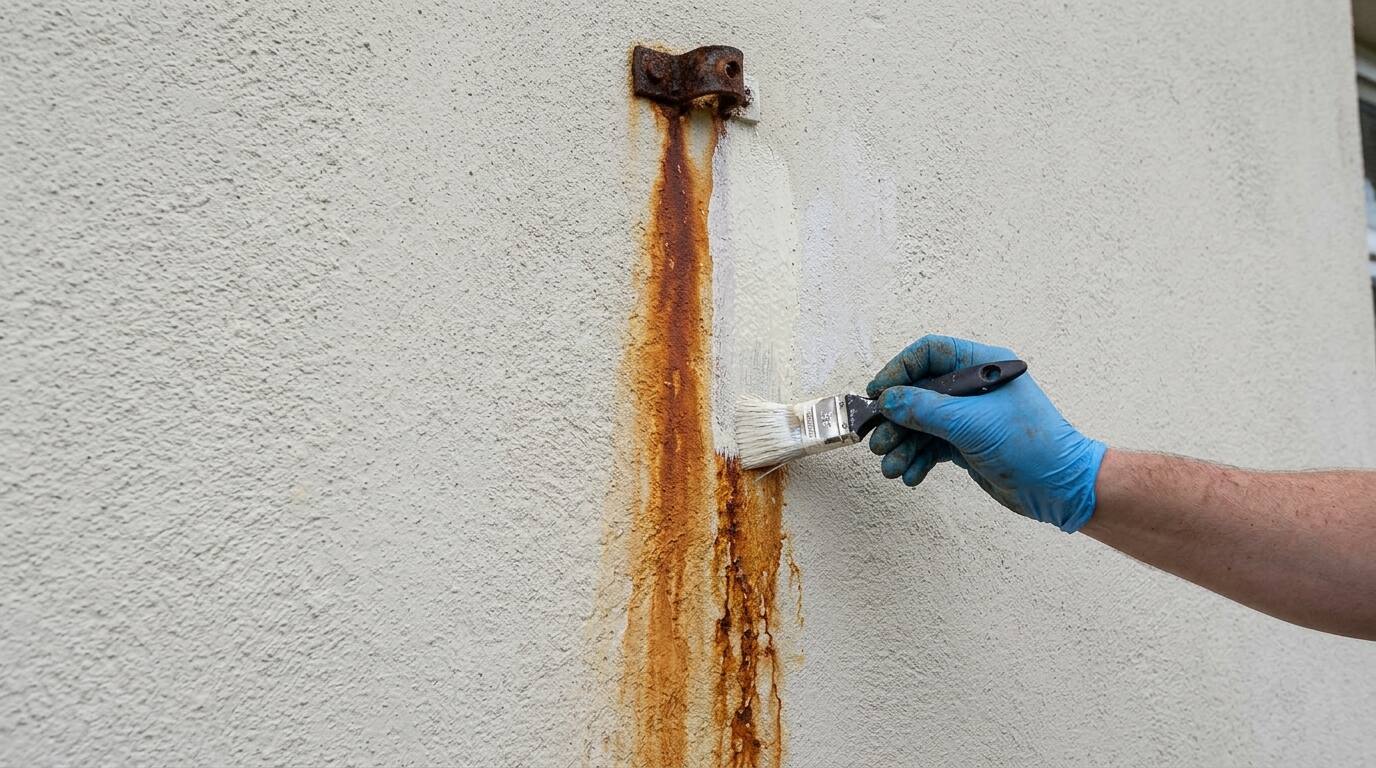
A rust stain is one of the more frustrating marks to appear on a home, that orange-brown streak bleeding out of a wall, down a render finish, across a roof, or spreading from a metal railing or fitting. It looks bad, and worse, if you simply paint over it, it comes straight back. That is because a rust stain is not just a surface mark, it is a sign that metal somewhere is corroding, and until you deal with that, no amount of paint will keep it covered. Here is what causes rust stains, and how to fix them properly before painting.
The instinct is to cover the stain with fresh paint, but rust defeats that in two ways, and understanding both is the key to fixing it properly.
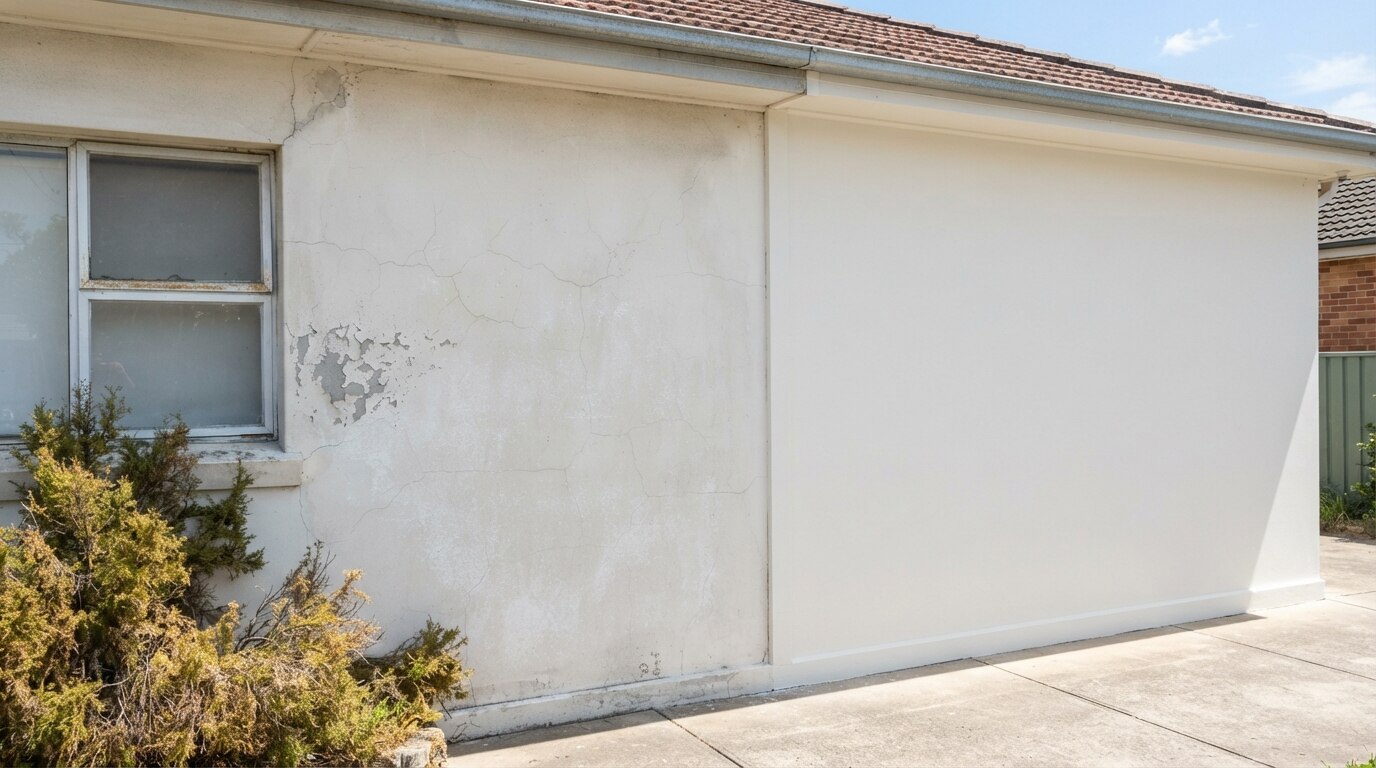
First, rust is a stain that bleeds through ordinary paint. Like other stubborn stains, the rust discolouration migrates up through a normal topcoat and reappears as a mark, often within weeks. Ordinary paint simply cannot hold it back. Second, and more importantly, rust is a symptom of corroding metal, and that corrosion is ongoing. Even if you managed to cover the existing stain, the metal underneath keeps rusting and keeps producing more staining, so the mark returns from the source regardless of how well you painted. Painting over rust treats neither problem, which is why it always comes back.
Because rust comes from corroding metal, the first real step is to find what is actually rusting, because that is what has to be addressed. Rust stains on a wall or render usually trace back to a metal element, a wall tie or metal fixing within or behind the wall, a nail or fastener, a metal lintel, a railing, bracket or fitting, or runoff from a rusting metal item above, like a bracket, a roof fastener or guttering. On a roof or metal surface, it is the metal itself corroding where its protective coating has failed. On a fence, it may be the metal posts or fixings.
Identifying the source matters because the fix depends on it. A stain running down a wall from a rusting bracket above is solved by dealing with the bracket, not by scrubbing the wall. Tracing the stain back to its origin is the step that turns a temporary cover-up into a lasting fix, and it is often where a professional’s eye helps.
Once you know the source, the fix follows a clear sequence.
Treat or remove the corroding metal. This is the core of it. The rusting metal element must be dealt with, the rust removed back to sound metal where possible, the element treated so it stops corroding, or in some cases replaced. A corroding wall tie, a rusted fixing or a failing metal item is the actual problem, and leaving it in place means the stain will return no matter what you do to the surface.
Clean the stained surface. The existing rust staining on the wall, render or surface is cleaned and treated as far as possible, using appropriate rust stain treatments to lift or neutralise the discolouration.
Apply the right primer. This is essential. A rust converting or stain blocking primer is applied, a product designed either to convert and stabilise rust or to seal the stain so it cannot bleed through the new paint. This is the step that stops the mark reappearing through your fresh coat, and ordinary primer or paint will not reliably do it.
Repaint. With the source treated and the stain properly sealed, the surface is repainted, and the result lasts because the cause and the stain have both been dealt with.
When the rust is on the metal itself, a railing, a gate, a roof, metal trim or guttering, the approach is a little different but follows the same logic. The rust must be removed back to sound, clean metal, by appropriate means, then the bare metal treated and primed with a suitable metal primer, because paint will not bond to rust or protect bare metal without it, and finally painted with a coating suited to metal. Any rust left under the new paint simply continues to corrode beneath it and breaks the finish, so thorough removal and the right primer are what make a metal repaint last. This is the same principle behind treating rust on a metal roof before painting it.
Rust is one of those problems that quietly gets worse. A small stain ignored, or merely painted over, is a corroding piece of metal continuing to deteriorate, and left long enough, corrosion can cause real damage, to a railing, a roof, a fixing, or the structure a wall tie supports. Treating rust properly is not only about the look, it stops the deterioration and protects the home. A stain treated at the source and sealed correctly is gone for good, where one painted over is a problem postponed, and usually worsened.
A small, accessible rust stain with an obvious, simple source, say a single rusted nail or a minor mark, can be a reasonable DIY fix with the right rust treatment and a stain blocking primer. Where it is worth calling a professional is when the source is not obvious or is hidden within or behind the wall, when there is significant rust on metal that needs proper removal and treatment, when the staining is extensive or keeps returning despite your efforts, or when it involves a roof, structural fixings or anything at height. A professional can trace the stain to its source, treat the corroding metal correctly, use the right rust converting or blocking primer, and deliver a finish where the stain genuinely does not come back, rather than a cover-up that fails.
At Mertico, we treat and fix rust stains properly across Sydney, on walls, render, metal, roofs and fences, by finding the corroding source, treating the rust, sealing the stain with the right primer, and repainting to a clean, lasting finish. We fix the cause, not just the mark, so it stays gone. We will assess it and give you an honest
Rust stains on walls, render, metal, roofs or fences are both a stain and a symptom, and painting straight over them fails for two reasons: the rust discolouration bleeds up through ordinary paint and reappears, and the underlying metal keeps corroding and producing more staining from the source. Fixing them properly starts with finding the source, usually a corroding metal element such as a wall tie, nail, fixing, lintel, bracket, railing, roof fastener or guttering, because the fix depends on treating that, not just the surface mark. The sequence is: treat or remove the corroding metal, removing rust back to sound metal, treating it so it stops corroding, or replacing it; clean the stained surface with appropriate rust stain treatments; apply a rust converting or stain blocking primer designed to convert and stabilise rust or seal the stain so it cannot bleed through, which ordinary primer will not reliably do; then repaint. On metal surfaces themselves, the rust must be removed back to clean sound metal, then the bare metal treated, primed with a metal primer and painted, since paint will not bond to rust and any left beneath continues to corrode, the same principle behind treating a metal roof before painting. Rust also worsens over time and can cause real deterioration, so treating it at the source protects the home, not just its appearance. A small stain with an obvious source can be DIY, while hidden sources, significant metal rust, extensive or returning staining, or anything structural or at height warrants a professional. Source: Mertico Painting Solutions, licensed Sydney painters.