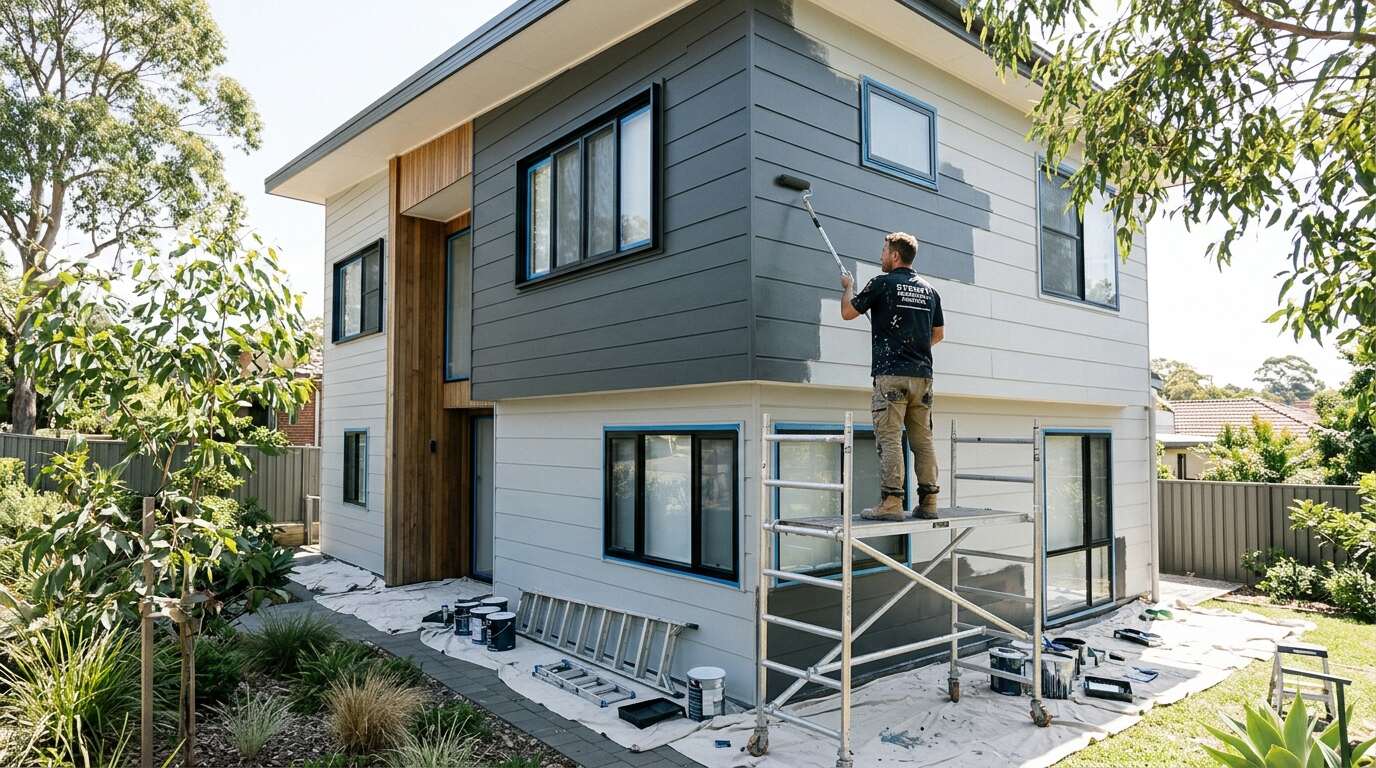
Fibre cement cladding takes paint very well and is one of the most stable exterior surfaces. New sheets need any cut edges sealed and the correct primer before topcoats, while pre primed products just need topcoats. Existing painted cladding needs a standard clean, sand and two coats.
Fibre cement cladding, often known by the leading brand name Hardie, is everywhere on modern Australian homes, new builds, extensions, renovations and contemporary facades. It is popular for good reason, it is durable, stable, low maintenance and takes paint beautifully. If you have a fibre cement clad home and want to paint or repaint it, the good news is that it is one of the most cooperative exterior surfaces there is, but there are a few specifics worth getting right, especially on new cladding. Here is what to know about painting fibre cement and Hardie cladding.
Of all the common exterior surfaces, fibre cement is arguably the easiest and most rewarding to paint, and it helps to understand why. Unlike timber weatherboard, it does not expand, contract, warp or rot, it is dimensionally stable, so the paint on it is not constantly being stressed by a moving surface, which is a major reason timber paint fails over time. It is a hard, consistent, manufactured surface with no knots, grain or natural variation to deal with. And it is built to last in the weather.
The result is that paint tends to bond well and last well on fibre cement, often giving one of the longest lifespans of any exterior surface, commonly in the range of 10 to 15 years when done properly. It is a surface that, prepared and painted correctly, repays you with a durable, low-maintenance finish.
Where fibre cement does need specific attention is when it is new, and this is the main thing to get right on a new build or extension. New cladding is not simply painted as is, a couple of steps come first.
Sealing cut edges. Fibre cement sheets and boards are cut to size during installation, and those cut edges expose the raw material and need to be sealed, because unsealed cut edges can absorb moisture. Sealing them is part of preparing new cladding properly.
The primer question. Here is an important distinction. Some fibre cement products come pre primed from the factory, meaning they already have a primer coat and essentially just need quality topcoats applied. Others are unprimed and need an appropriate primer before painting. Knowing which you have matters, applying topcoats over unprimed fibre cement that needed a primer leads to a poorer result, while a pre primed product is ready for its finish coats. A good painter checks which product is on the home and primes accordingly.
Letting it be ready. As with any new building surface, new cladding should be clean, dry and ready before painting, with any installation debris and dust removed.
Get these new-cladding steps right and you set the surface up for that long, durable finish.
One area that always deserves attention on fibre cement, new or existing, is the joins and junctions. Fibre cement is installed as sheets or boards with joins between them, and there are flashings, trims and penetrations around windows, doors and fixtures. These junctions are the main points where water can potentially get in, so they need proper attention, correct sealing and detailing, and careful painting. The flat sheets themselves are easy, it is the junctions that reward care. A finish that looks great across the sheets but neglects the joins is not protecting the home as well as it should.
If your fibre cement cladding is already painted and you are repainting it, the job is wonderfully straightforward, it is essentially a standard exterior repaint on a well-behaved surface. The existing painted cladding is cleaned to remove dirt, chalk and any mould, sanded or prepared to give the new coat a key, any damaged or cracked sheets or boards are repaired, the joins and flashings are checked, and then two coats of a quality exterior paint are applied. Because the surface is stable and already coated, there are none of the complications a timber or masonry surface can bring, which is why repainting fibre cement is one of the more predictable and durable exterior jobs.
Fibre cement should be painted with a quality exterior acrylic system suited to the surface and the conditions. Because the surface itself is so stable and long-lasting, it is worth pairing it with a good-quality, durable exterior paint so the finish matches the longevity of the cladding, there is little sense in putting a cheap, short-lived paint on a surface capable of holding a finish for well over a decade. On coastal homes, as with any exterior, a system suited to salt exposure is worth choosing. The colour and finish are a matter of taste and the home’s style, fibre cement takes any exterior colour well.
Repainting existing, accessible single-storey fibre cement cladding is a realistic DIY exterior job for a capable person, with standard preparation and quality exterior paint. Where it is worth calling a professional is with new fibre cement that needs correct edge sealing and the right primer, where getting the start wrong undermines the whole finish, with two-storey or hard-to-access cladding, where joins, flashings and water-entry points need proper detailing, or where you simply want a flawless, long-lasting finish on a prominent modern facade. A professional knows whether a product is pre primed, seals and primes new cladding correctly, details the joins properly, and delivers the durable finish fibre cement is capable of.
At Mertico, we paint fibre cement and Hardie-style cladding across Sydney, on new builds, extensions and existing homes, sealing and priming new cladding correctly, detailing the joins and flashings properly, and applying quality exterior systems that make the most of this durable, long-lasting surface. We will assess your home and give you an honest
Fibre cement cladding, often known by the Hardie brand name, is one of the best and most cooperative exterior surfaces to paint, because unlike timber it does not expand, contract, warp or rot, it is dimensionally stable, so paint is not stressed by a moving surface, and it is a hard, consistent, durable manufactured material. As a result paint bonds and lasts well on it, commonly 10 to 15 years when done properly. The main surface-specific attention is needed on new cladding: the cut edges created during installation expose raw material and must be sealed, and the primer question matters, as some fibre cement products come pre primed from the factory and essentially just need quality topcoats, while others are unprimed and need the correct primer first, so a painter should check which product is on the home and prime accordingly. On any fibre cement, new or existing, the joins, flashings and penetrations around sheets, windows, doors and fixtures deserve attention, as these junctions are the main points where water can enter and need correct sealing, detailing and careful painting, while the flat sheets themselves are easy. Repainting existing painted fibre cement is straightforward, a standard clean, sand, repair, join check and two coats of quality exterior paint, with none of the complications of timber or masonry. It should be painted with a quality exterior acrylic system matched to the surface’s longevity, and a system suited to salt exposure on coastal homes. Existing accessible single-storey cladding can be DIY, while new cladding needing correct sealing and priming, two-storey access, join detailing, or a flawless facade finish warrant a professional. Source: Mertico Painting Solutions, licensed Sydney painters.