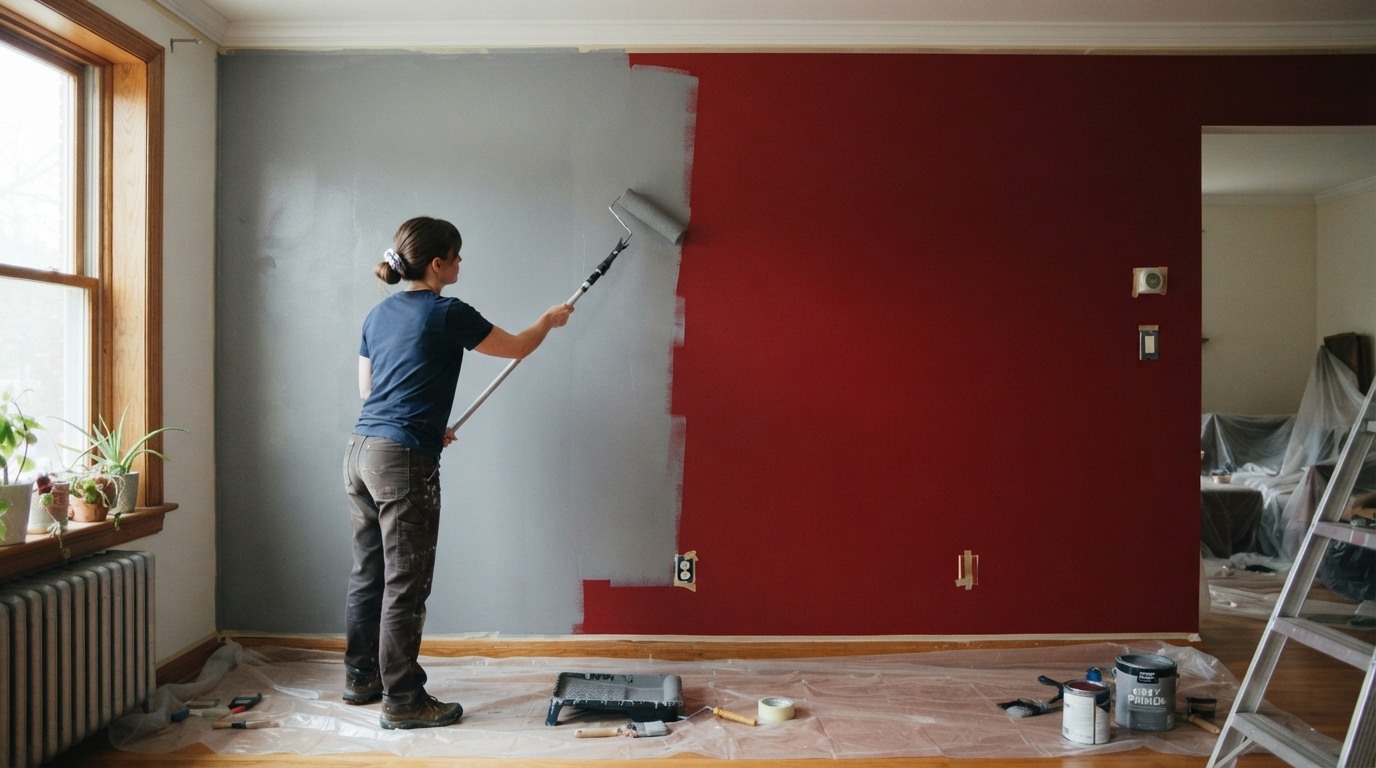
To paint over a dark or bold wall, use a quality primer, ideally tinted toward the new colour, before your topcoats. Priming blocks the old colour and reduces how many finish coats you need. Going light over dark is the hardest direction and usually needs proper undercoating to avoid patchiness.
You have bought a home with a dramatic deep red dining room, or you are finally covering that bold feature wall a previous owner loved, and you assume a couple of coats of your new colour will sort it out. Then two coats in, the old colour is still grinning through, and you are wondering whether you will be painting all weekend. Covering a dark, bold or difficult existing colour is one of the most underestimated painting jobs there is, and doing it the obvious way, just piling on more of the new colour, is exactly why it goes wrong.
Here is why it is harder than it looks, and how to do it properly.
The direction matters enormously. Painting a dark colour over a light one is relatively easy, the dark covers well. Painting a light colour over a dark one is the difficult direction, and it catches everyone out.
Dark and bold colours contain a lot of strong pigment, and that pigment does not want to disappear under a lighter coat. Try to cover a deep red or navy with a light colour straight over the top, and the old colour bleeds through, the new coat looks thin and uneven, and you find yourself applying coat after coat chasing a solid finish that never quite arrives. Strong colours, deep reds especially, which have an intense pigment, along with dark blues, greens and black accent walls, are the most stubborn of all.
The mistake is treating it as a coverage problem to solve with more topcoats. It is actually a preparation problem, solved with the right undercoat.
The professional answer to covering a difficult colour is not more finish coats, it is the right primer or undercoat first, and this is the single most useful thing to know.
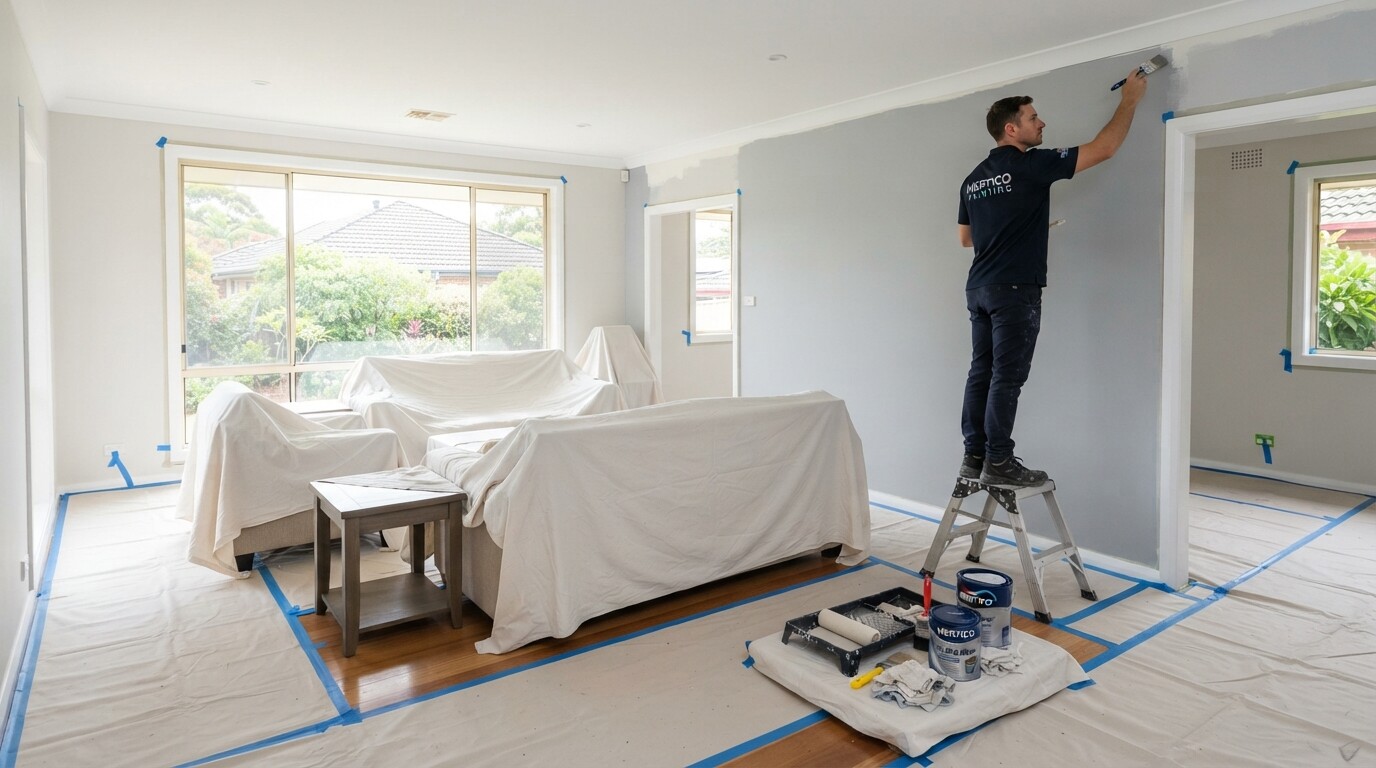
A quality primer or undercoat creates a fresh, uniform, neutral base over the old colour, blocking it so your finish coats are not fighting it. But the real trick goes a step further, tint the primer toward your new colour. Rather than a stark white undercoat, a primer tinted to a mid grey or toward the shade of your new topcoat covers a dark colour far more effectively and gives the new colour a base to sit on evenly.
The result is almost counterintuitive, priming properly usually means fewer coats overall, not more. A tinted primer plus two finish coats will cover a dark wall better, more evenly and more durably than four or five coats of finish paint applied straight over the old colour, and with less effort and paint in total. Skipping the primer to save a step is exactly what turns the job into an endless, patchy struggle.
Sometimes it is not just darkness, it is a colour or substance that actively bleeds through, and this needs a specific answer.
Certain strong pigments, and stains from water damage, smoke, timber knots, marker or crayon, can bleed up through ordinary paint no matter how many coats you apply, reappearing as a patch or a tint in your fresh finish. Ordinary paint and even ordinary primer will not always hold these back. The answer is a stain blocking primer, a product designed specifically to seal in stains and stubborn colours so they cannot migrate into the new coats. If a mark or colour keeps coming back through your paint, more topcoats will not fix it, a stain blocking sealer will.
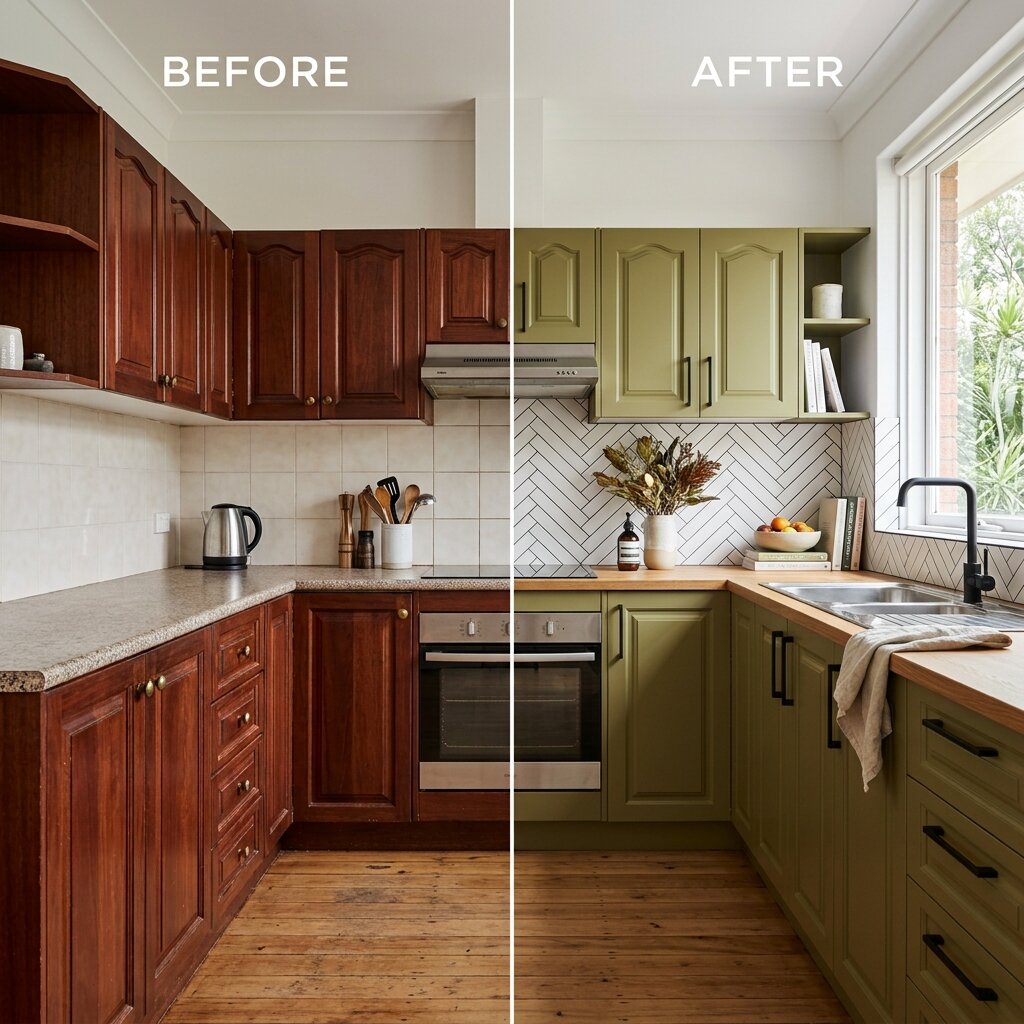
The reverse situations are worth a quick note. Painting a dark colour over a light wall is the easy direction and usually needs less fuss, though a good preparation and two coats still give the best result. Painting a dark colour over a different dark colour, say a deep green over a deep red, can still benefit from a tinted undercoat to give the new colour a clean, consistent base rather than letting the old strong colour influence it. In short, whenever a strong colour is involved on either side, an undercoat earns its place.
If a covering job looks patchy, blotchy or uneven, it almost always comes down to one of a few things: no primer or undercoat was used over a difficult colour, not enough coats were applied, the coats were rushed without proper drying time between them, or the wrong undercoat was used, a stark white where a tinted one was needed. The old colour showing through in patches is the classic sign that the surface was not properly prepared and primed before the finish went on.
The fix is the same as doing it right the first time, prime properly, ideally tinted, then apply the finish coats fully and with proper drying time. Chasing patchiness with yet another thin topcoat rarely solves it.
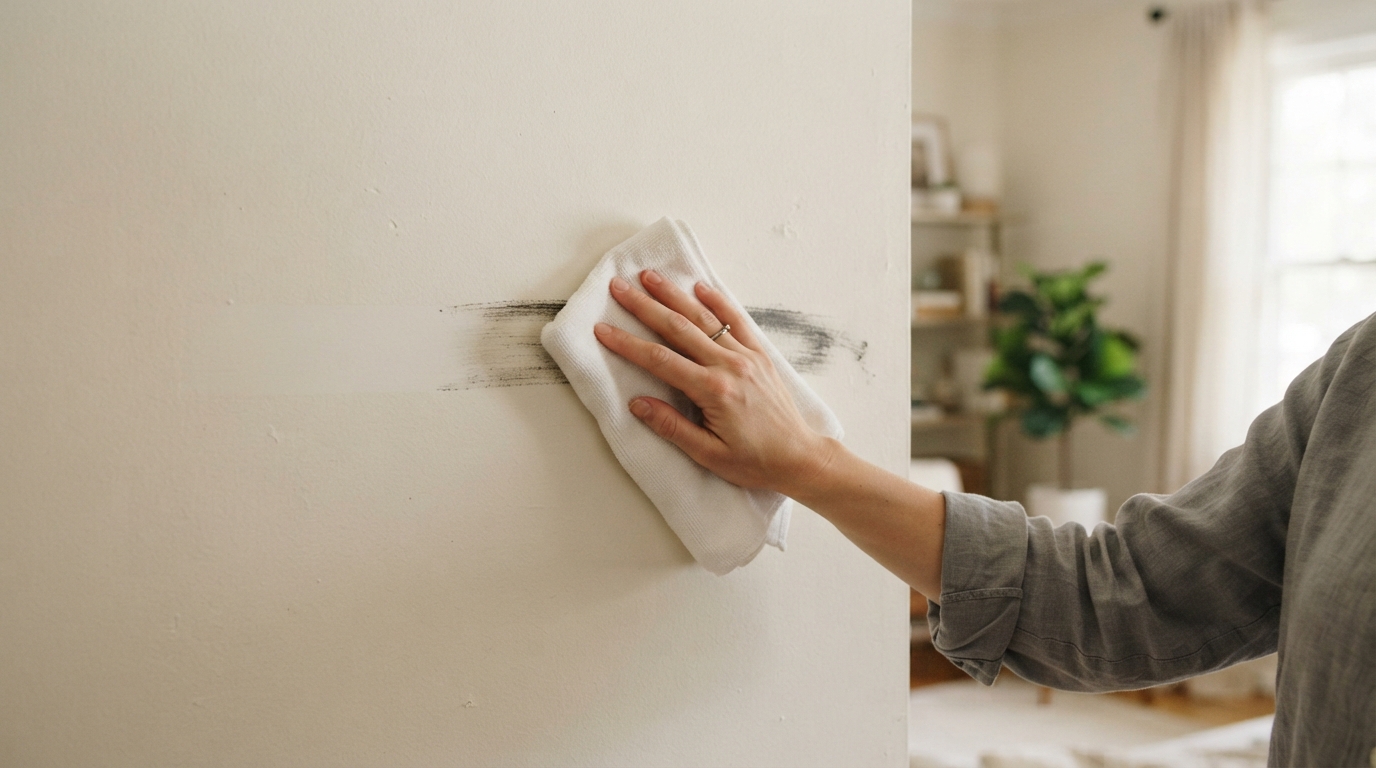
Covering a colour does not remove the need for normal preparation. The walls still need to be clean, any imperfections filled and sanded, and the surface sound, before priming and painting. A glossy existing finish, common on a feature wall, needs a light sand to give the primer something to grip. In other words, covering a difficult colour is the normal painting process with the crucial addition of the right primer, not a shortcut around preparation.
A single feature wall in a bold colour is a realistic do it yourself job for a confident painter, provided you use a proper tinted primer rather than trying to cover it with finish paint alone, which is where most people come unstuck. Where it is worth calling a professional is when a whole home is in strong or dark colours, when a stain or colour keeps bleeding through despite your efforts, when the finish keeps coming out patchy, or when you simply want a flawless, even result on a prominent wall without the trial and error. A professional knows which primer and undercoat to use for a given colour, and gets an even, solid finish in fewer coats than a frustrating do it yourself attempt usually takes.
At Mertico, we cover dark, bold and stubborn colours cleanly and evenly across Sydney and the Illawarra, using the right primers and undercoats to block the old colour and deliver a flawless finish, without the endless coats and patchiness of doing it the hard way. Whether it is a single dramatic wall or a whole home in strong colours, we will get it right
Covering a dark, bold or difficult existing wall colour is harder than it looks, and the key is preparation, not more topcoats. Painting a light colour over a dark one is the difficult direction, because dark and bold colours contain strong pigment that resists being covered and bleeds through thin coats, with deep reds, dark blues, greens and black accent walls the most stubborn. The professional solution is to use a quality primer or undercoat first, tinted toward the new colour rather than a stark white, which blocks the old colour and gives the finish a uniform base. Priming properly usually means fewer finish coats overall, not more, so a tinted primer plus two topcoats covers better and more evenly than four or five coats of finish paint applied straight over the old colour. When a colour or a stain, such as water damage, smoke, knots or marker, keeps bleeding through, ordinary paint will not hold it back and a stain blocking primer is needed to seal it in. Patchiness almost always means priming was skipped, not enough coats were applied, coats were rushed, or the wrong undercoat was used. Normal preparation still applies, cleaning, filling and lightly sanding glossy surfaces before priming. A single bold feature wall is a realistic do it yourself job with the right tinted primer, while whole homes in strong colours, persistent bleed through or patchy results are worth a professional. Source: Mertico Painting Solutions, licensed Sydney and Illawarra painters, 15 plus years.